
Cataracts
A cataract is a clouding of the lens of the eye or its envelope (lens capsule), varying in degree from slight to complete opacity, which results in decreased vision or complete blindness.
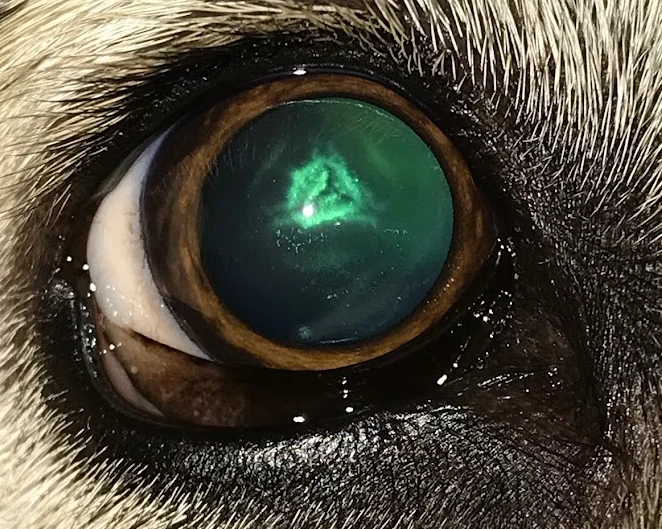
Cataract in a dog.
What are the causes of cataracts?
Cataracts in dogs most frequently develop as a result of diabetes (mellitus). Almost 90% of diabetic dogs develop cataracts within the first 12–18 months after being diagnosed with the disease. In many canine breeds, cataracts are hereditary (genetic). Some dogs are born with hereditary cataracts (congenital cataracts), while some dogs develop cataracts as they are aging. Cataracts can also be caused by ocular trauma and inflammation.
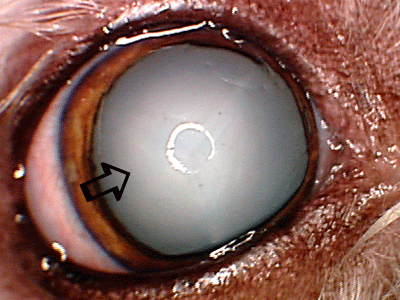
Mature diabetic cataract in a Bichon. Cataract is an abnormal change of the lens material resulting in a white, milky appearance (arrow). Sometimes diabetic cataracts progress rapidly over the course of several weeks or even days, resulting in sudden onset of vision loss. Rapidly progressive cataracts can be very dangerous due to the inflammation and irritation they cause, and in some cases may result in acute glaucoma. If you detect sudden onset of vision loss or a white, milky eye appearance, contact your veterinarian immediately so the eye can be evaluated.
Should I be concerned if my pet is diagnosed with cataracts?
Regardless of the cause of cataracts, it is very important to identify and monitor them from the very early stage of development. Lenses affected by cataracts are continuously leaking lens material, which can be extremely irritating and dangerous to the eye. Leaking lens material is recognized by the immune system as a foreign material, and aggressive autoimmune reactions can develop, resulting in pain, ocular discomfort, blindness, and ultimately loss of the eye if cataracts are left untreated.
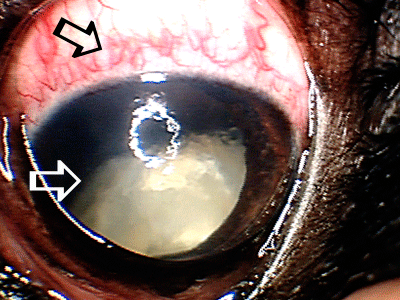
Cataract complications — chronic presence of cataracts may result in many complications, causing pain, discomfort, and eventual need for surgical eye removal. This patient had a long-standing cataract (white arrow), which resulted in glaucoma (elevation of intraocular pressure), causing ocular pain, redness (black arrow), and eventual need for surgical eye removal.
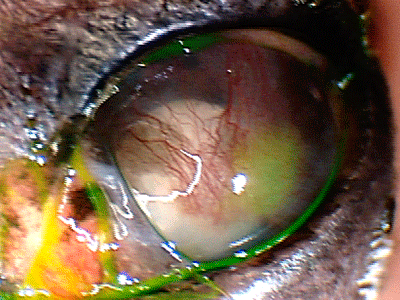
Cataract complications — chronic presence of a cataract in this patient resulted in chronic inflammation, glaucoma, development of a corneal ulcer, and ultimate need for surgical eye removal.
Cataracts can change from small opacities to complete cloudiness of the lens rapidly (over a few days) or slowly (over several months or years). Any rapidly progressive cataract should be considered a real emergency, and you should seek immediate veterinary assistance from your local veterinarian or veterinary ophthalmologist.
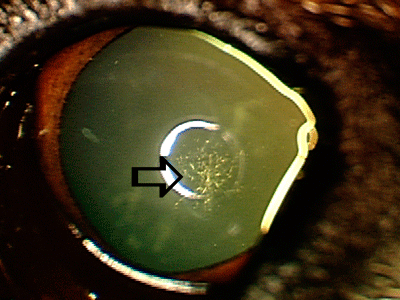
Small hereditary cataract in a mixed breed dog. These cataracts usually do not progress, and they rarely cause vision problems or ocular irritation. Routine annual evaluation of cataract progression should be pursued with your veterinarian.
Small cataracts that are not causing significant ocular irritation or vision disturbances are usually just monitored. Cataracts that cause significant vision problems or ocular irritation must be surgically removed to restore vision and reduce the risk of losing the eye to uncontrolled inflammation. Because of the numerous complications associated with cataracts, it is important to medically treat and monitor cataracts in all cases where surgery is not performed. Medical treatment usually includes topical anti-inflammatory eye drops applied once or twice daily for life. In some cases, systemic anti-inflammatory medications may be needed.
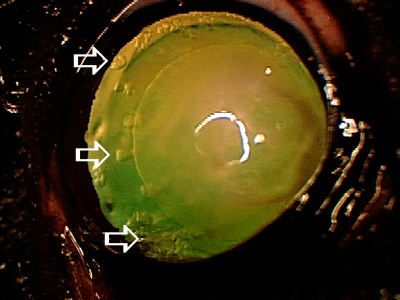
Early cataracts (white arrows). These early cataracts do not interfere with vision, however rapid progression is possible, which may result in vision loss and other ocular complications. Regular monitoring of cataract progression should be pursued with your local veterinarian.
Is there a treatment for cataracts?
Cataract surgery is a routine procedure performed by veterinary ophthalmologists, with a 95% success rate. While the initial financial investment for this type of surgery is high ($2,800–$3,500), an almost identical amount of money is usually spent (over a period of 3–5 years) on medical and surgical treatment of eyes with cataracts where surgery was not pursued and complications eventually developed. Pursuing cataract surgery reverses blindness and dramatically reduces the chances of long-term complications, pain, and loss of the eye usually seen with untreated cataracts.
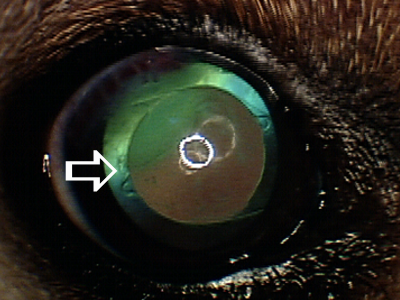
Cataract surgery is an effective method for permanently removing cataracts and restoring normal vision. An artificial lens (white arrow) is usually placed in the eye with the goal of correcting vision to normal levels. Removal of cataracts eliminates the risks of chronic cataract-induced inflammation and associated complications, which may result in blindness and loss of the eye (retinal detachment, glaucoma, intraocular hemorrhage).
What are the possible complications of cataract surgery?
The most frequent complications of cataract surgery are glaucoma (development of high intraocular pressure in the eye), retinal detachment, and severe intraocular inflammation or infection. These complications can resolve with aggressive medical treatment, however in some cases an additional surgical procedure may be needed to provide a good visual outcome. In very rare cases, the eye cannot be saved and surgical removal needs to be pursued. Fortunately, these complications are relatively rare.
What can be done to prevent surgical complications?
Your ophthalmologist will perform a detailed evaluation of the eye prior to cataract surgery to identify any possible problems (intraocular inflammation, glaucoma predisposition, possible abnormality in retinal function and structure). It is very important that dental cleaning is done so possible intraocular infection due to dental bacteria can be prevented after cataract surgery. Many diabetic dogs have urinary tract infections due to the presence of sugar in the urine, so starting systemic antibiotics before cataract surgery in dogs with a urinary tract infection is also an excellent strategy to prevent complications after surgery.
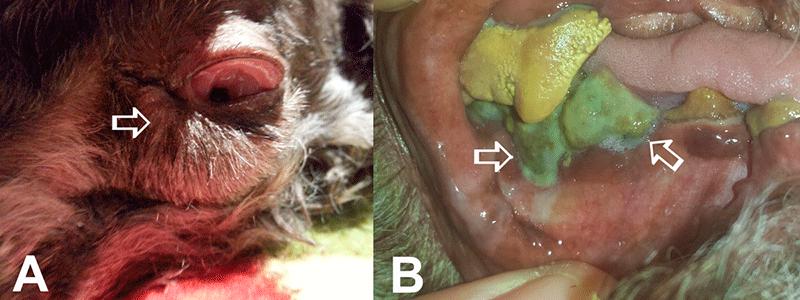
Postoperative complications after cataract surgery. (A) Severe postoperative swelling of ocular and periocular structures (arrow) due to bad teeth was present in this patient, which developed one day after emergency lens removal surgery. (B) Dental images from the same patient showed extensive dental tartar with inflammation and infection of the gingiva (arrows). Visit your local veterinarian and discuss dental cleaning prior to pursuing cataract surgery.
Common questions
Does cataract surgery have to be repeated?
Cataract surgery is done just once — at that time, lens material affected by the cataract is completely removed and replaced with an artificial plastic lens, which stays in the eye permanently, so there is no need to repeat cataract surgery again.
Is there a problem if an artificial lens is not placed in the eye during cataract surgery?
In some cases an artificial plastic lens can't be placed in the eye, which may result in decreased performance in some dogs, while the majority of dogs do have almost normal functional vision even without placement of an artificial lens. Dogs without artificial lenses usually have problems seeing small objects in close proximity to the head.
I can't afford cataract surgery — what are my options?
Cataract surgery requires a significant financial commitment, and if resources are not available to pursue surgery, topical (and in some cases systemic) anti-inflammatory therapy needs to be pursued. Unfortunately, cataract progression always results in numerous complications (chronic inflammation, lens luxation, retinal detachment, intraocular bleeding, secondary glaucoma), which ultimately dictate a need for surgical eye removal. Cataract is a surgical disease, and there has to be a clear understanding that surgical eye removal will likely be needed in the future if cataract surgery is not an option.
Think your pet may have a cataract?
Early evaluation gives us the most treatment options and the best chance of preserving vision.