
Immature Cataract
A cataract is any opacity of the normally transparent lens caused by alteration of lens structure. Cataracts may be unilateral or bilateral, symmetric or asymmetric, stationary or progressive. They may develop slowly or appear very rapidly. Unlike in humans, in whom cataracts commonly develop with aging, dogs may develop cataracts at any age, including puppyhood.
The causes of cataract are varied. In dogs, cataract is most commonly inherited, often described as autosomal recessive, bilateral but not necessarily symmetric, and in certain breeds develops at a characteristic age and in a characteristic lens location. Predisposed breeds listed in the source include Fox Terriers, Bichons, Boston Terriers, Poodles, Cocker Spaniels, Maltese, and Miniature Schnauzers. Cataract may accompany systemic diseases such as diabetes mellitus or may result from intoxication, adverse drug effects, nutritional deficiency such as in puppies fed milk replacers, traumatic lens injury, uveitis, or retinal disease.
Lens proteins can leak from a cataractous lens and provoke a marked inflammatory response because the body recognizes them as foreign material. In addition to uveitis, cataract may cause glaucoma, vitreous degeneration, retinal detachment, lens subluxation or luxation, and ultimately loss of vision and/or the eye.
Cataracts are described according to stage and location within the lens. By stage, they are classified as incipient, involving approximately 10-15% of the lens; immature, encompassing stages between incipient and mature; mature, involving the entire lens with loss of visible fundic reflection; and hypermature, in which lens lysis and cataract resorption have begun.
In an immature cataract, portions of the lens remain transparent or contain less dense opacity, permitting some fundic reflection and leaving the patient with moderate visual impairment. If an immature cataract is nonprogressive, the source states that it will not cause uveitis.
Treatment
Diagnosis is made by ophthalmic examination. Immature cataracts should be monitored regularly. Topical anti-inflammatory medications are used. If the cataract progresses rapidly or begins to cause inflammation or loss of vision, surgical lens removal by phacoemulsification is recommended.
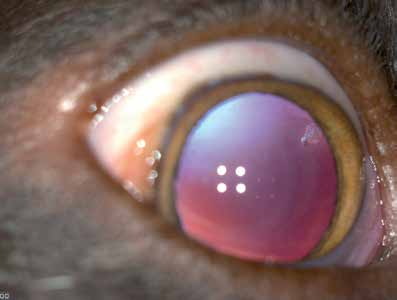
Incipient subcapsular equatorial cataract in a dog.
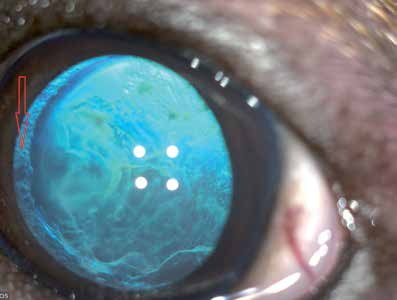
Immature subcapsular cataract. A ring-shaped lesion resembling coalescing bubbles is visible in the subcapsular equatorial zone, red arrow. Cortical cataract is also present in the remainder of the lens.
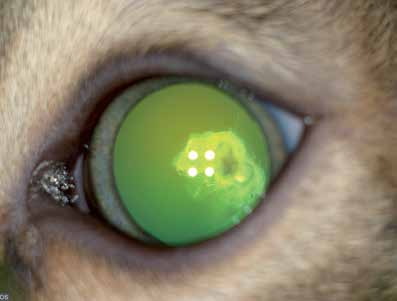
Immature posterior cortical cataract in a cat.
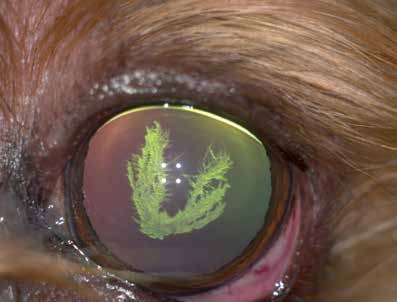
Immature anterior cortical cataract in a dog.
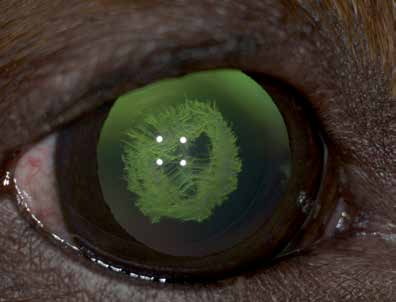
Immature anterior cortical cataract in a dog.
Related in-depth guide
Cataracts
Our full guide, including treatment and surgical options
Adapted from the Atlas of Ocular Diseases in Dogs and Cats by Dr. Siniša D. Grozdanić and colleagues. © Animal Eye Consultants of Iowa. The text and clinical images on this page are original content from the authors' own clinical practice and research, and may not be reproduced, distributed, or repurposed without permission.
Think your pet may have immature cataract?
Early evaluation gives us the most treatment options and the best chance of preserving vision.