
Mature Cataract
A cataract is any opacity of the normally transparent lens caused by a change in lens structure. Cataracts may be unilateral or bilateral, symmetric or asymmetric, stationary or progressive, and may develop slowly or very rapidly. Dogs can develop cataracts at any age, including as puppies.
The source describes inherited cataract as the most common form in dogs, often autosomal recessive and bilateral but not necessarily symmetric, with breed-specific age and lens-location patterns. Predisposed breeds listed include Fox Terriers, Bichons, Boston Terriers, Poodles, Cocker Spaniels, Maltese, and Miniature Schnauzers. Cataracts may also accompany diabetes mellitus or result from intoxication, adverse medication effects, nutritional deficiency, traumatic lens injury, uveitis, or retinal disease.
Leakage of lens protein can provoke intraocular inflammation. Cataracts may also lead to glaucoma, vitreous degeneration, retinal detachment, lens subluxation or luxation, and ultimately loss of vision and/or the eye. Cataract stage is described as incipient, immature, mature, or hypermature.
In a mature cataract, the lens is completely opaque, tapetal reflection cannot be seen through the lens, and the patient is blind. The source states that if the lens is not surgically removed, uveitis, glaucoma, retinal detachment, and severe ocular pain are highly likely complications, and that these complications may eventually necessitate removal of the eye. It further states that untreated cataracts in cats can transform into aggressive malignant tumors, described as sarcomas, and therefore recommends cataract surgery in cats.
Treatment
Diagnosis is established by ophthalmic examination. Uveitis should be controlled with topical anti-inflammatory treatment. Phacoemulsification is the surgical treatment described for mature cataracts to preserve vision and the eye.
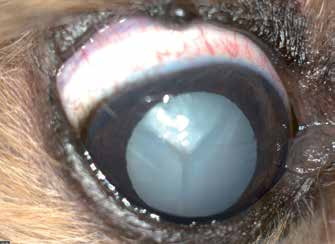
Mature cataract in a dog. Y-shaped grooves are visible on the anterior lens capsule.
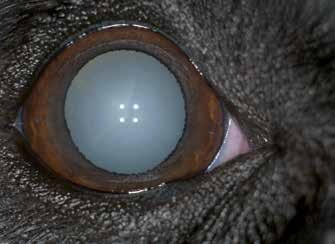
Mature cataract in a young dog. Iris ectropion is visible secondary to uveal inflammation.
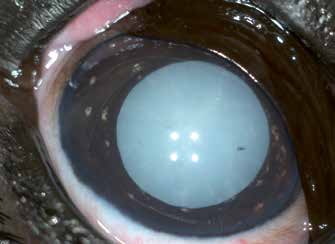
Mature cataract beginning to show signs of hypermaturity, including reflective particles.
Related in-depth guide
Cataracts
Our full guide, including treatment and surgical options
Adapted from the Atlas of Ocular Diseases in Dogs and Cats by Dr. Siniša D. Grozdanić and colleagues. © Animal Eye Consultants of Iowa. The text and clinical images on this page are original content from the authors' own clinical practice and research, and may not be reproduced, distributed, or repurposed without permission.
Think your pet may have mature cataract?
Early evaluation gives us the most treatment options and the best chance of preserving vision.