
Pigmentary Keratitis
Pigmentary keratitis is progressive deposition of pigment on the cornea or conjunctiva and is most commonly observed in brachycephalic dog breeds such as the Pekingese, Pug, Shih Tzu, and Lhasa Apso. It may accompany lagophthalmos, dry eye disease, or trichiasis secondary to medial entropion, all of which can produce chronic keratitis.
The change most commonly begins in the medial cornea and appears as a smooth, irregularly shaped, dark-brown deposit. Epithelial and subepithelial hypertrophy and melanocyte hyperplasia occur together with subepithelial scarring. Severe pigmentary keratitis may involve the entire cornea and result in loss of vision.
Treatment
The primary condition responsible for pigmentary keratitis, such as chronic irritation, lagophthalmos, or dry eye disease, should first be treated or corrected. Pigment can be readily removed by keratectomy or cryotherapy, but has a high tendency to recur.
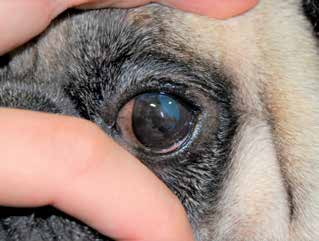
Pigmentary keratitis in a Pug. A large area of pigment is deposited in the medial cornea.
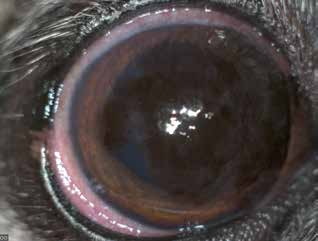
Pigmentary keratitis in a Pug.
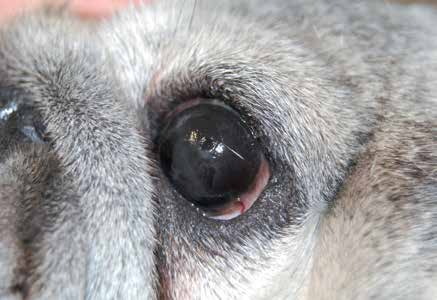
Pigmentary keratitis in a Pug. The cornea is completely covered by very dark, almost black pigment.
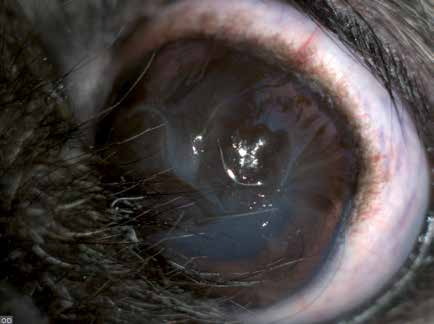
Pigmentary keratitis in a Pekingese resulting from chronic ocular irritation by hairs from the nasal fold. This dog also has dry eye disease and lagophthalmos, which contributed to development of pigmentary keratitis.
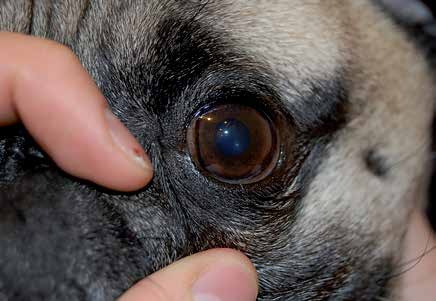
Pug six months after surgery known as medial canthoplasty. Corneal pigmentation and ocular discharge are no longer present.
Related in-depth guide
Corneal Disease
Our full guide, including treatment and surgical options
Adapted from the Atlas of Ocular Diseases in Dogs and Cats by Dr. Siniša D. Grozdanić and colleagues. © Animal Eye Consultants of Iowa. The text and clinical images on this page are original content from the authors' own clinical practice and research, and may not be reproduced, distributed, or repurposed without permission.
Think your pet may have pigmentary keratitis?
Early evaluation gives us the most treatment options and the best chance of preserving vision.