
Eosinophilic Keratoconjunctivitis
Eosinophilic keratoconjunctivitis is a feline disease characterized by chronic, progressive infiltration of the cornea and/or conjunctiva by inflammatory exudate that predominantly contains eosinophils, which gives the disease its name. Some studies cited conceptually in the source describe the infiltrate as predominantly lymphoplasmacytic, with eosinophils only sporadically present. The disease is considered a consequence of an abnormal immune response, and some authors have associated it with herpesvirus, chlamydial organisms, and mycoplasmas.
Affected cats have whitish or yellowish corneal plaques, often accompanied by pronounced corneal vascularization. Eyelid depigmentation, conjunctival swelling, and thickening of the third eyelid may occur. Lesions begin at the limbus and may affect only one eye, which is more common, or both eyes. The deposits cause discomfort; the cat may keep the eye closed and ocular discharge may develop.
Treatment
Diagnosis is confirmed by cytologic examination of a sample obtained from the infiltrate. Treatment consists of topical immunosuppressive medications such as corticosteroids, tacrolimus, or cyclosporine. Because corticosteroid therapy may activate herpesvirus infection, the source recommends concurrent antiviral therapy. Long-term treatment is advised to control the disease and reduce recurrence. Recurrences may occur even without interruption of therapy.
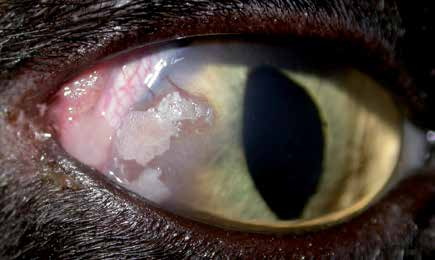
Eosinophilic keratoconjunctivitis in a cat. Whitish corneal deposits, neovascularization, and edema are visible.
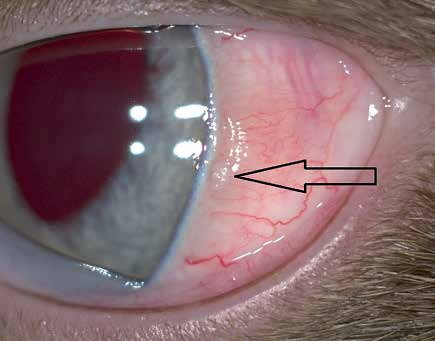
Eosinophilic keratoconjunctivitis in a cat. Subtle conjunctival deposits are visible in the early stage of disease.
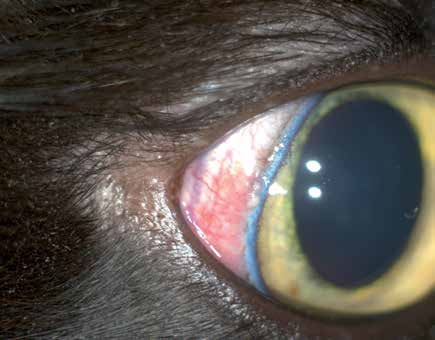
Eosinophilic keratoconjunctivitis in a cat. Two nodular whitish masses are readily visible against the bluish limbal background.
Related in-depth guide
Corneal Disease
Our full guide, including treatment and surgical options
Adapted from the Atlas of Ocular Diseases in Dogs and Cats by Dr. Siniša D. Grozdanić and colleagues. © Animal Eye Consultants of Iowa. The text and clinical images on this page are original content from the authors' own clinical practice and research, and may not be reproduced, distributed, or repurposed without permission.
Think your pet may have eosinophilic keratoconjunctivitis?
Early evaluation gives us the most treatment options and the best chance of preserving vision.