
Endotheliitis (Deep Keratitis)
Endotheliitis is inflammation of the corneal endothelium characterized by corneal edema, keratic precipitates, and an anterior chamber reaction. The cause is most commonly immune-mediated or autoimmune. Historically, it was frequently associated with herpesvirus or canine adenovirus type 1 (CAV-1) infection, as well as vaccination with live CAV-1 according to the source.
The patient has a constricted pupil (miosis) and a bluish appearance to the eye because of corneal edema. Accumulation of fluid in the cornea can lead to formation of bullae (bullous keratopathy), ulcerative keratitis, and secondary glaucoma.
Treatment
The history, clinical presentation, and testing for viral infection can assist diagnosis. Treatment consists of topical and systemic anti-inflammatory medications, including corticosteroids when indicated, and topical antiviral medications when herpesvirus infection is involved. Consequences of endotheliitis, including ulcers and glaucoma, must be treated appropriately. In many cases, surgery is required, such as superficial keratectomy combined with a Gundersen conjunctival graft.
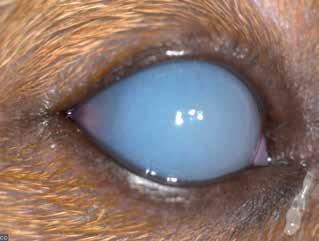
Endotheliitis in a three-month-old puppy after vaccination with attenuated live adenovirus. The bluish color of the eye is caused by corneal edema.
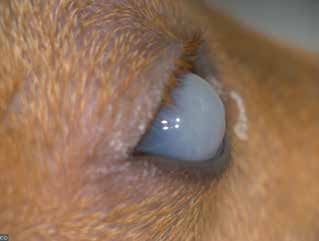
Endotheliitis. The same puppy photographed from another angle. Keratoconus is visible.
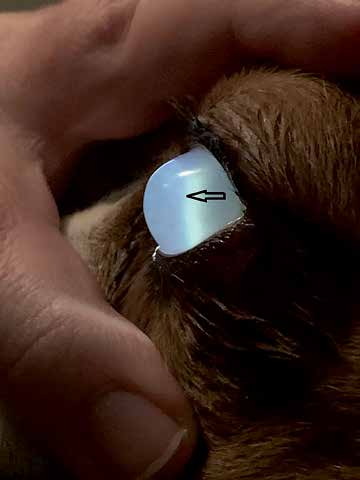
Endotheliitis in a three-month-old Beagle puppy after vaccination. Although the vaccine did not contain live CAV-1, endotheliitis and marked secondary corneal edema developed. The photograph was taken from the side during slit-lamp examination. The black arrow indicates the corneal endothelium.
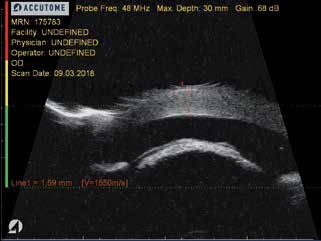
Ultrasound image of the cornea of a dog with endotheliitis. The thickened cornea is visible as the upper semicircular structure; the red line marks tissue thickness.
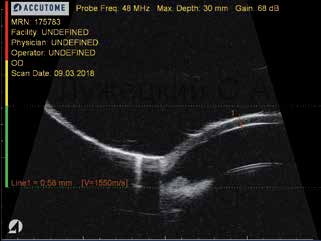
Ultrasound image of the cornea of a healthy dog.
Related in-depth guide
Corneal Disease
Our full guide, including treatment and surgical options
Adapted from the Atlas of Ocular Diseases in Dogs and Cats by Dr. Siniša D. Grozdanić and colleagues. © Animal Eye Consultants of Iowa. The text and clinical images on this page are original content from the authors' own clinical practice and research, and may not be reproduced, distributed, or repurposed without permission.
Think your pet may have endotheliitis (deep keratitis)?
Early evaluation gives us the most treatment options and the best chance of preserving vision.