
Dermoid
A dermoid is an island of normally haired skin located where this type of tissue should not normally occur. It may be found on the cornea, limbus, conjunctiva, third eyelid, or eyelids. The condition is hereditary in some dog and cat breeds, including the German Shepherd Dog, Neapolitan Mastiff, Dachshund, Saint Bernard, and Birman cat. It becomes visible immediately after birth or when the animal opens its eyes during the second week of life. Hairs irritate ocular structures, producing blepharospasm and tearing. Corneal ulcers or fibrin deposits are often observed.
Treatment
Dermoids are generally superficial and readily removed surgically. A corneal lesion remaining after removal may be protected with a conjunctival flap to promote healing, or may be allowed to heal without additional surgery. If a dermoid is removed from the eyelid, eyelid reconstruction may be required to preserve normal anatomy.
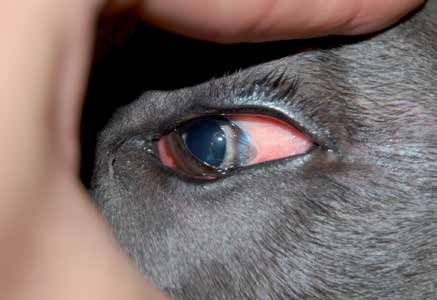
Corneoconjunctival dermoid in a dog.
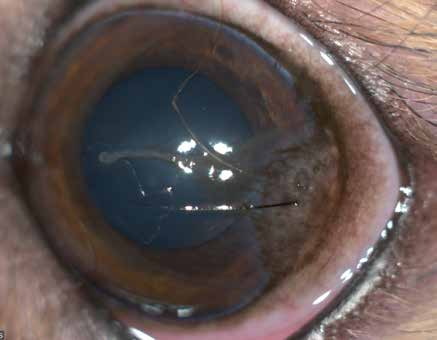
Corneoconjunctival dermoid in a dog.
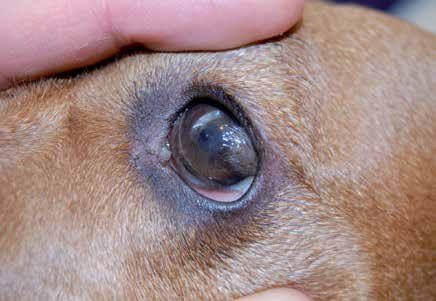
Corneoconjunctival dermoid in a dog.
Related in-depth guide
Corneal Disease
Our full guide, including treatment and surgical options
Adapted from the Atlas of Ocular Diseases in Dogs and Cats by Dr. Siniša D. Grozdanić and colleagues. © Animal Eye Consultants of Iowa. The text and clinical images on this page are original content from the authors' own clinical practice and research, and may not be reproduced, distributed, or repurposed without permission.
Think your pet may have dermoid?
Early evaluation gives us the most treatment options and the best chance of preserving vision.