
Corneal Squamous Cell Carcinoma
Squamous cell carcinoma can occur on the cornea of older dogs. Hereditary factors, ultraviolet radiation exposure, and chronic tissue inflammation are considered important contributors. The source describes this as an intraepithelial neoplasm that does not penetrate deeply into the corneal stroma. Clinically, it appears as an elevated grayish or pink proliferative mass in contact with the vasculature and extending along the corneal surface. Neovascularization and corneal opacity are present. The neoplasm is reported somewhat more commonly in Pugs and English Bulldogs and occurs less commonly in cats.
Treatment
Diagnosis is established by histopathologic examination. After diagnosis, the source recommends a complete blood count and serum biochemistry profile, aspiration or biopsy of regional lymph nodes, radiographs of the head, thorax, and abdomen, and abdominal ultrasonography. Treatment consists of surgical removal by lamellar keratectomy, combined with cryotherapy and/or radiotherapy, followed by topical chemotherapy with mitomycin C.
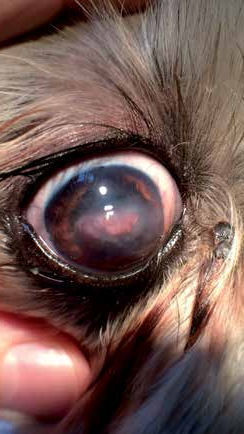
Corneal squamous cell carcinoma.
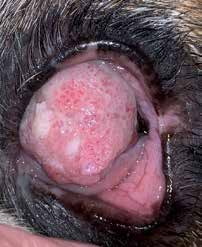
Corneal squamous cell carcinoma covering most of the corneal surface.
Related in-depth guide
Corneal Disease
Our full guide, including treatment and surgical options
Adapted from the Atlas of Ocular Diseases in Dogs and Cats by Dr. Siniša D. Grozdanić and colleagues. © Animal Eye Consultants of Iowa. The text and clinical images on this page are original content from the authors' own clinical practice and research, and may not be reproduced, distributed, or repurposed without permission.
Think your pet may have corneal squamous cell carcinoma?
Early evaluation gives us the most treatment options and the best chance of preserving vision.