
Corneal Hemorrhage
Corneal hemorrhage may occasionally occur when corneal neovascularization is present. It most commonly affects only one eye and is visible immediately adjacent to corneal blood vessels.
Treatment
Diagnosis is readily made from the clinical appearance. It is very important to exclude systemic disorders associated with a tendency to bleed, including coagulopathy or vasculopathy, metabolic disorders, and systemic hypertension, as well as tumors of vascular endothelial origin such as corneoscleral hemangioma and hemangiosarcoma. The cause of corneal neovascularization, such as chronic keratitis or dry eye disease, should also be identified and treated.
If hemorrhage is minimal, treatment is unnecessary because it will resolve spontaneously. When treatment is required, topical steroidal or nonsteroidal anti-inflammatory medications are applied. A reddish discoloration of varying intensity may remain at the site of hemorrhage for months, and a permanent area of corneal opacity may remain when hemorrhage was located deeper in the stroma.
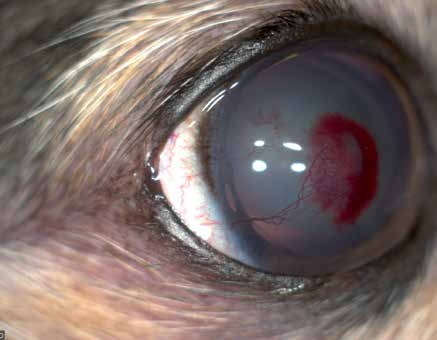
Corneal hemorrhage.
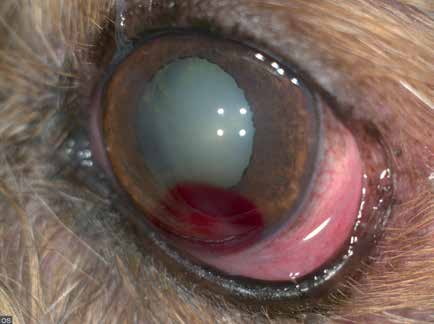
Corneal hemorrhage.
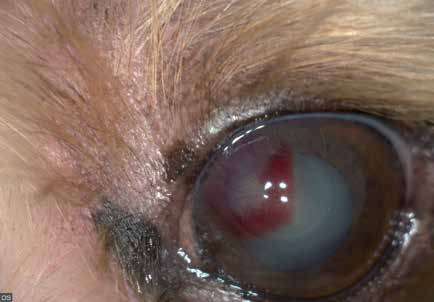
Corneal hemorrhage.
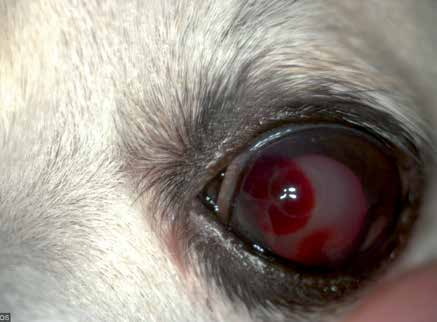
Corneal hemorrhage.
Related in-depth guide
Corneal Disease
Our full guide, including treatment and surgical options
Adapted from the Atlas of Ocular Diseases in Dogs and Cats by Dr. Siniša D. Grozdanić and colleagues. © Animal Eye Consultants of Iowa. The text and clinical images on this page are original content from the authors' own clinical practice and research, and may not be reproduced, distributed, or repurposed without permission.
Think your pet may have corneal hemorrhage?
Early evaluation gives us the most treatment options and the best chance of preserving vision.