
Chronic Superficial Keratitis (CSK)
Chronic superficial keratitis (CSK) is a progressive, bilateral inflammatory condition of the cornea that can potentially result in loss of vision. It occurs most commonly in German Shepherd Dogs and is also known as German Shepherd pannus, but may occur in Belgian Malinois, Greyhounds, and other dog breeds. The disease is immune-mediated, with an inherited predisposition. Exposure to ultraviolet radiation is considered a possible trigger that induces clinical expression in predisposed dogs.
The first visible lesion may be a small, red, vascularized area of cornea. As the disease progresses, vascularization and pigmentation become evident, beginning in the temporal cornea and advancing toward the center. White crystalline lines or dots may often be seen within the corneal stroma, 1-2 mm from the edge of the lesion and following a blood vessel; these represent degenerative corneal changes. Over time, the entire cornea may become vascularized, pigmented, thickened, and opaque. Some dogs also have a thickened and pigmented third eyelid. If untreated, possible consequences include loss of vision and/or development of squamous cell carcinoma according to the source.
Treatment
Diagnosis is based on the appearance of the lesions and can be supported by histopathologic examination following biopsy. Topical corticosteroids and/or cyclosporine and/or tacrolimus are used. Subconjunctival corticosteroids or a tacrolimus implant may occasionally be required when the owner cannot administer medication daily. If topical treatment does not provide satisfactory control, systemic treatment with corticosteroids and other immunosuppressive medications may be added. In exceptionally advanced cases, superficial keratectomy may be necessary to preserve vision. Lifelong therapy is recommended to maintain disease control and minimize recurrence.
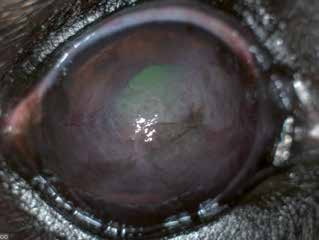
Chronic superficial keratitis in a German Shepherd Dog. A pigmented, opaque cornea with pronounced vascularization is visible.
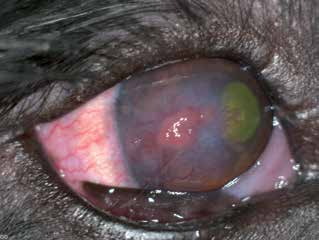
Chronic superficial keratitis in a German Shepherd Dog. Vascularization, inflammatory-cell infiltration represented by a pink mass a few millimeters from the limbus, and corneal edema are visible.
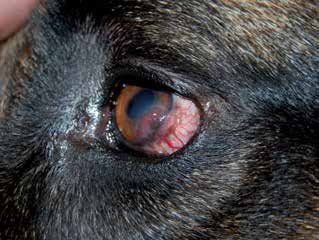
Chronic superficial keratitis in a German Shepherd Dog. The lesion is temporal, with vascularization and a small area of pigment deposition in its center.
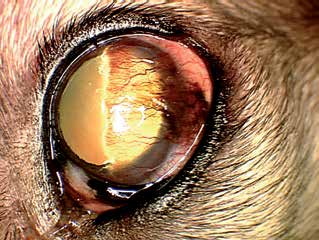
Chronic superficial keratitis in a German Shepherd Dog. Corneal vascularization and pigmentation are visible.
Related in-depth guide
Corneal Disease
Our full guide, including treatment and surgical options
Adapted from the Atlas of Ocular Diseases in Dogs and Cats by Dr. Siniša D. Grozdanić and colleagues. © Animal Eye Consultants of Iowa. The text and clinical images on this page are original content from the authors' own clinical practice and research, and may not be reproduced, distributed, or repurposed without permission.
Think your pet may have chronic superficial keratitis (csk)?
Early evaluation gives us the most treatment options and the best chance of preserving vision.