
Bullous Keratopathy
Bullous keratopathy is characterized by formation of corneal bullae, or small to large blisters, secondary to endothelial disease such as endothelial dystrophy or endotheliitis. If the corneal endothelium cannot maintain normal fluid transport, excess fluid accumulates within the cornea, causing edema and bulla formation.
More rarely, a corneal bulla may occur with infectious keratitis (keratomalacia). In that situation, enzymes originating from bacteria, damaged corneal cells, and inflammatory cells damage the corneal structure, causing the cornea to become thinner, softer, and prone to bulla formation. In cats, bullous keratopathy is described in the source as occurring as a result of an aggressive immune response in which the immune system attacks corneal collagen, and is generally observed in cats receiving topical or systemic immunosuppressive medications.
When bullae rupture, very painful ulcers develop. These ulcers may become infected and extend into deeper corneal layers, resulting in a descemetocele, in which only Descemet's membrane prevents globe rupture, or in corneal perforation.
Treatment
Treatment is directed toward stabilizing enzymatic processes using serum, tetracyclines, EDTA solution, and N-acetylcysteine. Topical anticollagenase medications and antibiotics are applied. Edematous corneal tissue can be surgically removed and covered with conjunctiva, or a corneoconjunctival transposition can be performed. If the bullae are caused by endothelial dystrophy, therapy appropriate for endothelial dystrophy is used.
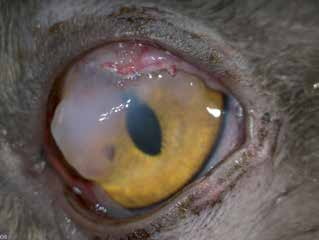
Bullous keratopathy in a cat after corneal surgery.
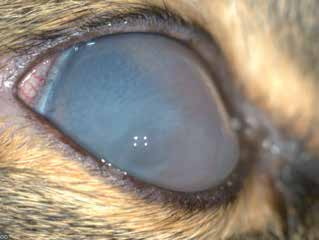
Bullous keratopathy. The bulla is difficult to identify against the edematous cornea.
Related in-depth guide
Corneal Disease
Our full guide, including treatment and surgical options
Adapted from the Atlas of Ocular Diseases in Dogs and Cats by Dr. Siniša D. Grozdanić and colleagues. © Animal Eye Consultants of Iowa. The text and clinical images on this page are original content from the authors' own clinical practice and research, and may not be reproduced, distributed, or repurposed without permission.
Think your pet may have bullous keratopathy?
Early evaluation gives us the most treatment options and the best chance of preserving vision.