
Zinc-Responsive Dermatosis
Zinc deficiency most commonly develops because of persistently reduced absorption of zinc from the intestinal tract or because the diet is deficient in zinc and rich in calcium. It is most commonly seen in young Siberian Huskies and Alaskan Malamutes but may also occur in other rapidly growing dog breeds. Early in the disease, erythema, alopecia, scales, and crusts develop around the lips, chin, eyes, and ears. Thick crusts may occur over the elbows and other pressure points and on the paw pads, where they may interfere with locomotion. At these sites, the skin is inelastic and often fissures. Secondary Malassezia and bacterial skin infections are common. In some dogs, reduced senses of smell (hyposmia) and taste (hypogeusia) are observed.
Treatment
Diagnosis is based on the clinical presentation and exclusion of other diseases and is confirmed histopathologically. Treatment consists of zinc supplementation, with lesions resolving after four to six weeks.
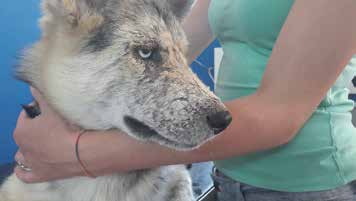
Zinc-responsive dermatosis. Alopecia with hyperkeratotic plaques on the facial skin.
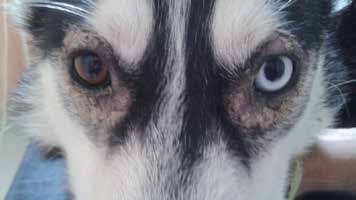
Zinc-responsive dermatosis. Erythema and crusts in the periocular region.
Adapted from the Atlas of Ocular Diseases in Dogs and Cats by Dr. Siniša D. Grozdanić and colleagues. © Animal Eye Consultants of Iowa. The text and clinical images on this page are original content from the authors' own clinical practice and research, and may not be reproduced, distributed, or repurposed without permission.
Think your pet may have zinc-responsive dermatosis?
Early evaluation gives us the most treatment options and the best chance of preserving vision.