
Retinal Detachment
Retinal detachment is separation of the neuroretina from the retinal pigment epithelium. Loss of structural integrity results in loss of retinal function and progressive degeneration of the detached retina. Regardless of cause, one or more of three primary mechanisms are responsible: subretinal accumulation of exudate or cellular material; a retinal tear or hole; or traction exerted by membranes formed within the vitreous.
A small localized detachment may cause little change in vision and may go unnoticed. More extensive or complete detachment causes sudden loss of vision. When a large area of retina detaches, peripheral retinal tearing or retinal dialysis may occur. Large amounts of fluid then accumulate subretinally and produce ballooning of the retina, which in extreme cases may contact the lens. Extensive anterior displacement of detached retina may be visible with a good light source even without indirect ophthalmoscopy.
Causes include primary ocular and systemic disease. The source lists intraocular inflammation of any cause, glaucoma, ocular tumors, congenital ocular disease, trauma, intraocular surgery, and systemic infectious, endocrine, neoplastic, and autoimmune diseases. Retinal detachment may cause intraocular hemorrhage, and intraocular hemorrhage may itself cause detachment. Complications include uveitis, glaucoma, hyphema, and cataract. Predisposed breeds listed include Shih Tzus, Poodles, Bichons, and Labrador Retrievers.
Treatment
Diagnosis is made by indirect ophthalmoscopy. Ultrasonography is particularly important when the anterior ocular structures are opaque. The underlying cause should be identified and treated, and the source recommends surgical repair of detached retina by vitreoretinal surgery as soon as possible.
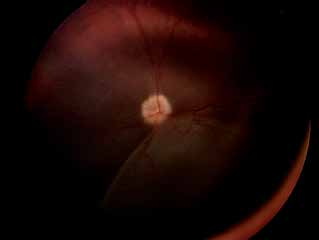
Bullous retinal detachment in a dog.
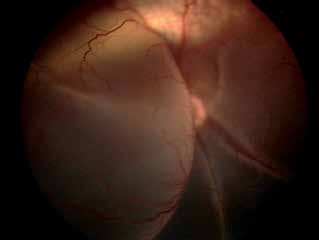
Bullous retinal detachment in a dog.
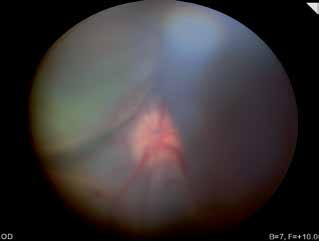
Bullous retinal detachment in a dog.
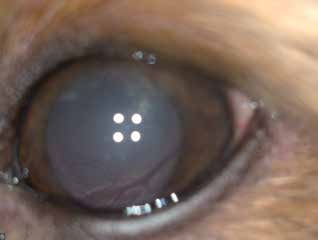
Retinal detachment. Retinal vessels can be seen through the dilated pupil.
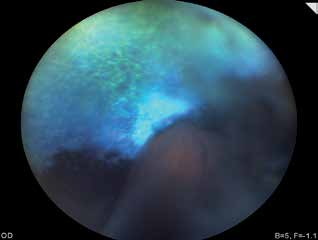
Complete peripheral rhegmatogenous retinal detachment in a dog, with the neuroretina remaining anchored at the optic nerve.
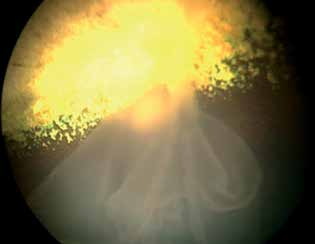
Complete peripheral rhegmatogenous retinal detachment in a dog, with the neuroretina remaining anchored at the optic nerve.
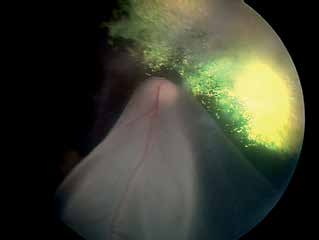
Complete peripheral rhegmatogenous retinal detachment in a dog.
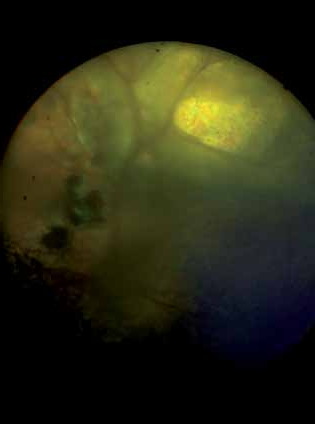
Traumatic ocular injury produced an oval retinal tear in this dog. Ocular fluid passes beneath the retinal tissue and causes detachment. Surgical repair requires vitreoretinal surgery with silicone-oil tamponade.
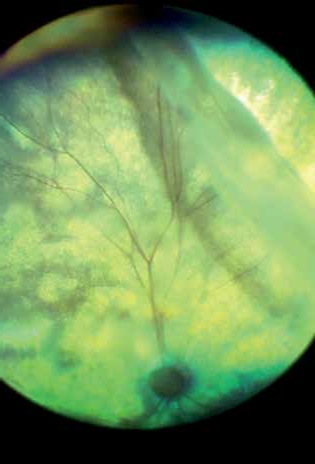
Retinal detachment in a cat caused by chronic inflammation and a large temporal retinal tear, with secondary accumulation of fluid beneath the retina.
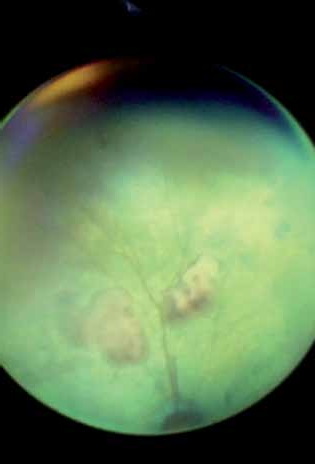
The same cat after vitreoretinal surgery with silicone-oil tamponade. White steroid deposits are visible after intravitreal injection.
Related in-depth guide
Retinal Disorders
Our full guide, including treatment and surgical options
Adapted from the Atlas of Ocular Diseases in Dogs and Cats by Dr. Siniša D. Grozdanić and colleagues. © Animal Eye Consultants of Iowa. The text and clinical images on this page are original content from the authors' own clinical practice and research, and may not be reproduced, distributed, or repurposed without permission.
Think your pet may have retinal detachment?
Early evaluation gives us the most treatment options and the best chance of preserving vision.