
Papilloma
Papillomas are benign neoplasms that may occur on the canine conjunctiva. Two types of very similar neoplasms are recognized. In young dogs, multiple conjunctival papillomas of viral origin, caused by papillomavirus, are seen and are most commonly cauliflower-like with keratinized epithelium. In older dogs, solitary squamous papillomas of nonviral origin are common on the conjunctiva. These are usually small and more darkly pigmented, although they may also be pale pink. They are generally located on the bulbar conjunctiva, where a blood vessel running through the neoplasm can often be clearly seen. They may irritate the cornea.
Treatment
Diagnosis is established by histopathologic examination of the tumor. If they do not cause irritation, viral papillomas are not removed because they may resolve spontaneously over a period of months. Squamous papillomas do not share this behavior and should be surgically removed when they cause clinical problems.
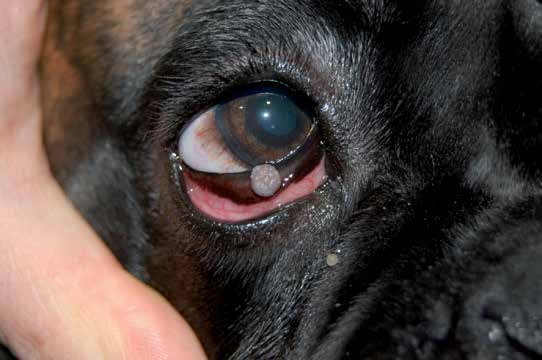
Papilloma on the conjunctiva of the third eyelid.
Adapted from the Atlas of Ocular Diseases in Dogs and Cats by Dr. Siniša D. Grozdanić and colleagues. © Animal Eye Consultants of Iowa. The text and clinical images on this page are original content from the authors' own clinical practice and research, and may not be reproduced, distributed, or repurposed without permission.
Think your pet may have papilloma?
Early evaluation gives us the most treatment options and the best chance of preserving vision.