
Palpebral Squamous Cell Carcinoma
Palpebral squamous cell carcinoma, or squamous cell carcinoma of the eyelid skin, is a malignant tumor arising from keratinocytes of the epidermis or those lining the ducts of the Meibomian glands. The tumor is highly invasive, spreads aggressively into surrounding tissues, and can rapidly extend from the eyelids to the conjunctiva and entire globe, although it metastasizes slowly. Exposure to ultraviolet radiation and chronic inflammation are believed to contribute to its development. It is diagnosed more commonly in cats and in animals with white hair coats.
When diagnosed early, the cure rate is high, but delayed intervention can result in a fatal outcome; therefore, early recognition is important. The tumor is most often seen in areas of skin without hair or with short hair, including the ears and eyelids, and initially resembles a scratch. It soon begins to spread and is often flush with the skin but may be concave, raised, cauliflower-like, or irregular in shape, and light to darker pink. Numerous ulcerations subsequently develop, wounds form, and the tumor becomes more intensely red. Concurrent blepharoconjunctivitis is common.
Treatment
Diagnosis is established by histopathologic examination. Because of metastatic potential, regional lymph nodes are aspirated and the aspirates examined. MRI and CT of the head are desirable. The tumor is removed by surgical excision and local chemotherapy with mitomycin is administered. In early disease, phototherapy may also be used to destroy the tumor, although the source states that this technique had, at that time, been described only in horses.
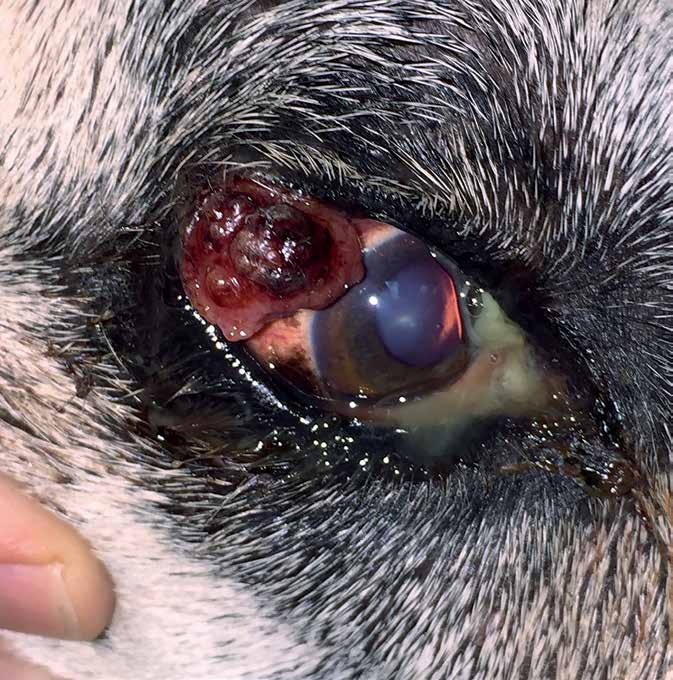
Palpebral squamous cell carcinoma in a dog, located on the lateral eyelid margin.
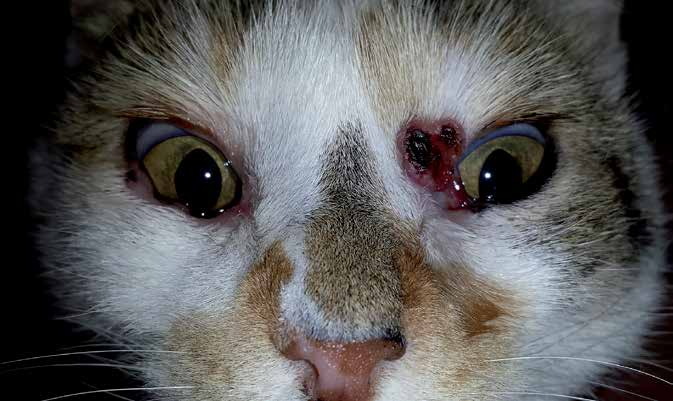
Palpebral squamous cell carcinoma in a cat.
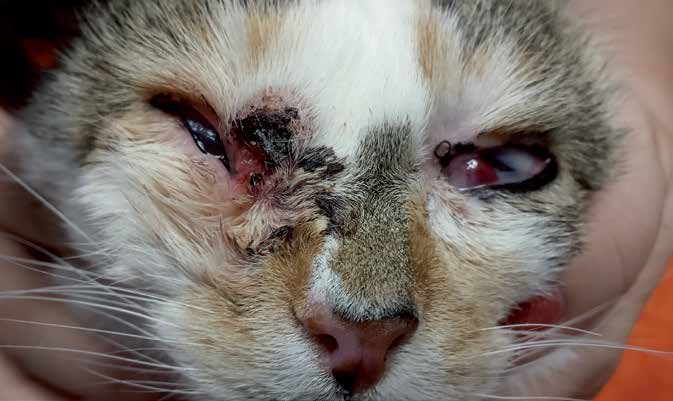
Palpebral squamous cell carcinoma in a cat. Same cat as in the previous figure, at a different stage of disease.
Adapted from the Atlas of Ocular Diseases in Dogs and Cats by Dr. Siniša D. Grozdanić and colleagues. © Animal Eye Consultants of Iowa. The text and clinical images on this page are original content from the authors' own clinical practice and research, and may not be reproduced, distributed, or repurposed without permission.
Think your pet may have palpebral squamous cell carcinoma?
Early evaluation gives us the most treatment options and the best chance of preserving vision.