
Ocular Proptosis
Ocular proptosis is anterior displacement of the globe out of its normal position within the orbit. Trauma is the most common cause, and proptosis can occur particularly in brachycephalic dog breeds. Poor prognostic indicators include prolonged duration of the prolapse, globe rupture, severe injury to the extraocular muscles, hyphema, and absence of a pupillary reflex.
In severe proptosis, vision in the contralateral healthy eye must also be evaluated because of possible damage to the optic chiasm. Proptosis should be distinguished from exophthalmos and buphthalmos. Exophthalmos is anterior prominence of the globe while the globe remains within the orbit. It may result from cellulitis, orbital abscesses, retrobulbar neoplasia, masticatory or periorbital myositis, and zygomatic gland adenitis or mucocele. Buphthalmos is enlargement of the globe accompanied by enlargement of the orbit and palpebral fissure and develops as a consequence of chronic glaucoma.
Treatment
If the eye can be salvaged, the globe is repositioned under general anesthesia and a tarsorrhaphy, or temporary suturing of the eyelids, is performed. According to the source, an eye with a preserved pupillary reflex after repositioning has a good prognosis for visual recovery.
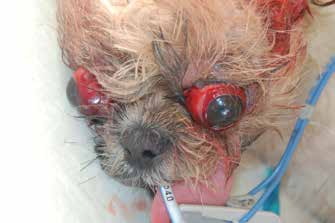
Bilateral ocular proptosis in a dog with an eyelid laceration.
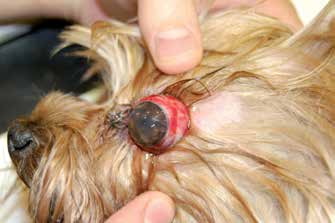
Ocular proptosis in a dog.
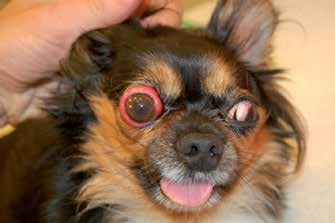
Ocular proptosis in a dog.
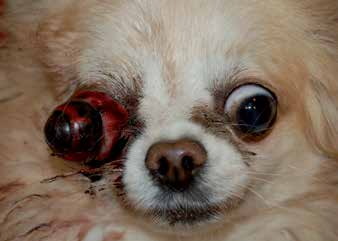
Ocular proptosis in a dog.
Adapted from the Atlas of Ocular Diseases in Dogs and Cats by Dr. Siniša D. Grozdanić and colleagues. © Animal Eye Consultants of Iowa. The text and clinical images on this page are original content from the authors' own clinical practice and research, and may not be reproduced, distributed, or repurposed without permission.
Think your pet may have ocular proptosis?
Early evaluation gives us the most treatment options and the best chance of preserving vision.