
Neuroparalytic Keratitis/Hemifacial Paralysis
Branches of the facial nerve innervate facial and periocular muscles. Facial nerve paresis or paralysis therefore produces weakness or paralysis of the muscles supplied by the nerve. The condition may be unilateral, which is more common, or bilateral. Causes include trauma, neoplasia, otitis, hypothyroidism, autoimmune neuropathy, and prolonged anesthesia. Idiopathic facial nerve paralysis is nevertheless described as the most common diagnosis.
Clinical signs include drooping of the lower lip, facial asymmetry, reduced or absent menace-associated blink and palpebral reflex, and secondary reduction of tear-film protection. If the patient cannot protect the eye by blinking, exposure-related keratitis develops.
Treatment
The cause of facial paralysis should be investigated. Improvement may require months and the condition may sometimes be irreversible. The source lists corticosteroids, pilocarpine, and lubricants as treatments. Partial tarsorrhaphy may occasionally be the only means of maintaining ocular comfort.
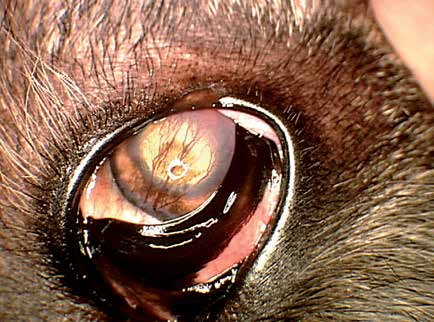
Neuroparalytic keratitis. Corneal edema and neovascularization are visible.
Adapted from the Atlas of Ocular Diseases in Dogs and Cats by Dr. Siniša D. Grozdanić and colleagues. © Animal Eye Consultants of Iowa. The text and clinical images on this page are original content from the authors' own clinical practice and research, and may not be reproduced, distributed, or repurposed without permission.
Think your pet may have neuroparalytic keratitis/hemifacial paralysis?
Early evaluation gives us the most treatment options and the best chance of preserving vision.