
Neurogenic Dry Eye Disease
Any lesion that affects parasympathetic innervation of the eye and partially or completely interrupts innervation of the lacrimal glands can cause neurogenic dry eye disease. It is often accompanied by a dry, cracked ipsilateral nostril, xeromycteria, because of impaired innervation of the nasal glands.
Causes include inflammatory, often autoimmune processes, trauma, and neoplasia; in some cases no cause is identified and the condition is considered idiopathic. Depending on the location of the neurologic lesion, signs of dry eye may occur together with decreased corneal sensation, facial muscle dysfunction, or Horner syndrome.
Treatment
The cause should be investigated, with MRI playing an important diagnostic role. Treatment described in the source includes pilocarpine, anti-inflammatory medications, and lubricants. Idiopathic neurogenic dry eye disease may occasionally resolve spontaneously. Cyclosporine and tacrolimus eye drops may provide substantial benefit despite the neurologic nature of the disorder. When medical therapy is unsuccessful and pain with continuous corneal surface injury is present, parotid duct transposition is recommended.
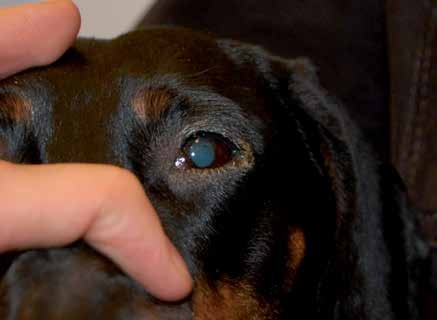
Neurogenic dry eye disease. A Dachshund with mucoid material accumulating on the eyelids.
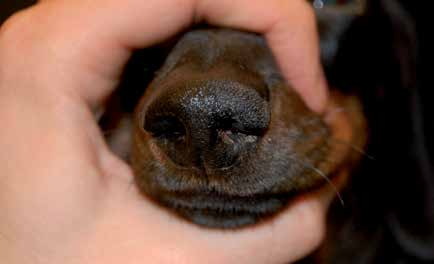
Neurogenic dry eye disease. The same dog as in the previous figure, showing the left nostril. A dry nostril, xeromycteria, is visible.
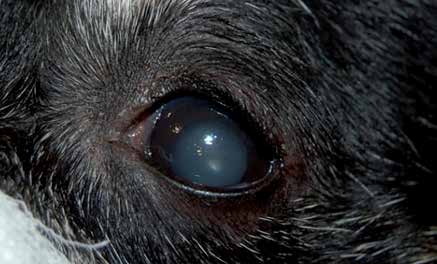
Neurogenic dry eye disease. The corneal surface lacks its normal luster and the Schirmer tear test value in this dog was 0 mm/min.
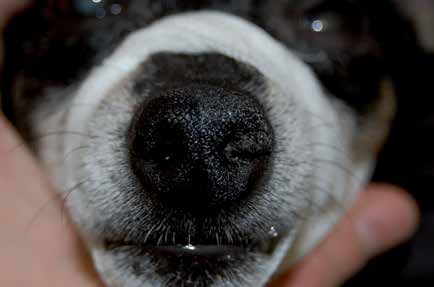
Neurogenic dry eye disease. The same dog, showing the ipsilateral nostril, which is dry; the nasal opening is almost completely obstructed by desiccated material.
Adapted from the Atlas of Ocular Diseases in Dogs and Cats by Dr. Siniša D. Grozdanić and colleagues. © Animal Eye Consultants of Iowa. The text and clinical images on this page are original content from the authors' own clinical practice and research, and may not be reproduced, distributed, or repurposed without permission.
Think your pet may have neurogenic dry eye disease?
Early evaluation gives us the most treatment options and the best chance of preserving vision.