
Necrolytic Migratory Erythema (Hepatocutaneous Syndrome)
In hepatocutaneous syndrome, skin lesions develop as a consequence of chronic liver disease or a glucagon-secreting pancreatic tumor. Older dogs are most commonly affected; according to the source, the disease had been reported in only one cat. Skin changes include erythema, erosions, scales, and crusts, most commonly over pressure points such as the elbows, knees, and chest, on the hind limbs, and around the lips and eyes. Marked hyperkeratosis affects all paws. In later stages of disease, polyuria, polydipsia, anorexia, and lethargy may develop.
Treatment
Diagnosis is based on the results of the complete blood count and biochemical testing, abdominal ultrasonography, and histopathologic examination of biopsies from skin and internal organs. The disease has a poor prognosis, with an average survival time of up to five months after diagnosis according to the source. If a pancreatic tumor is the cause, surgical removal is preferable. Because the skin lesions are a consequence of nutritional deficiency, zinc and essential fatty acid supplementation is recommended. Corticosteroids at anti-inflammatory doses may improve skin lesions, but there is a risk of inducing diabetes mellitus.
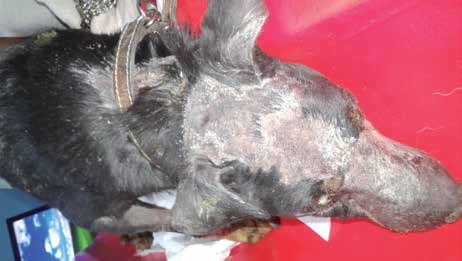
Hepatocutaneous syndrome. Scales, crusts, and alopecia on the face.
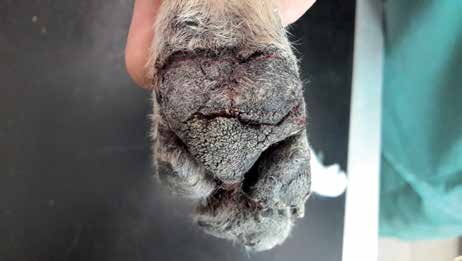
Hepatocutaneous syndrome. Crusting and hyperkeratosis of the paws.
Adapted from the Atlas of Ocular Diseases in Dogs and Cats by Dr. Siniša D. Grozdanić and colleagues. © Animal Eye Consultants of Iowa. The text and clinical images on this page are original content from the authors' own clinical practice and research, and may not be reproduced, distributed, or repurposed without permission.
Think your pet may have necrolytic migratory erythema (hepatocutaneous syndrome)?
Early evaluation gives us the most treatment options and the best chance of preserving vision.