
Merle Ocular Dysgenesis (MOD)
Merle ocular dysgenesis is described in the source as a hereditary, autosomal recessive congenital ocular disorder that occurs occasionally in dogs with merle or harlequin coat coloration. It is most commonly noted in Australian Shepherds with this coloration, with similar changes described in Collies, Shetland Sheepdogs, Great Danes, Dachshunds, and other breeds.
A genetic mutation results in abnormal embryonic tissue differentiation and multiple ocular abnormalities, including microphthalmia, microcornea, heterochromia, iris hypoplasia or coloboma with dyscoria or pseudopolycoria, iridocorneal angle dysplasia, absence of the tapetum, retinal dysplasia, choroidal dysplasia, optic nerve coloboma, and vitreous degeneration. The source states that cataract, retinal detachment with secondary intraocular hemorrhage, and staphyloma occur in more than 50% of dogs with this genetic mutation. The most severe ocular changes occur in homozygous light-colored merle/harlequin dogs with white heads. In addition to impaired or absent vision, affected dogs may have varying degrees of congenital deafness.
Treatment
Diagnosis is established by ophthalmic examination. There is no specific treatment, although surgery can address individual complications such as cataract, hyphema, glaucoma, or retinal detachment. The source emphasizes strict selective breeding practices to reduce occurrence of the syndrome.
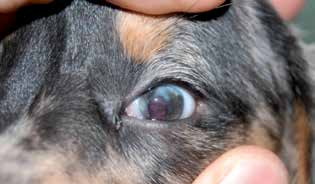
Merle ocular dysgenesis in a Dachshund. Microphthalmia, dyscoria, iris coloboma, and cataract are visible.
Adapted from the Atlas of Ocular Diseases in Dogs and Cats by Dr. Siniša D. Grozdanić and colleagues. © Animal Eye Consultants of Iowa. The text and clinical images on this page are original content from the authors' own clinical practice and research, and may not be reproduced, distributed, or repurposed without permission.
Think your pet may have merle ocular dysgenesis (mod)?
Early evaluation gives us the most treatment options and the best chance of preserving vision.