
Mast Cell Tumor (Mastocytoma)
A mast cell tumor is a malignant neoplasm arising from mast cells, a type of inflammatory cell found in connective and subcutaneous tissues. In dogs, depending on the degree of differentiation of the neoplastic cells (grades I, II, and III in the source), a mast cell tumor may remain localized with little tendency to infiltrate surrounding tissues and low metastatic potential (grade I), or may be highly invasive, aggressively infiltrate surrounding tissue, and have a higher metastatic rate (grade III).
In cats, the degree of differentiation also affects prognosis, but feline mast cell tumors are generally benign according to the source. A mast cell tumor can interfere with normal eyelid function and irritate the cornea; prognosis depends on the degree of differentiation of the neoplastic cells. The tumor appears as a solitary or multiple lesion in the skin or subcutaneous tissue. It may remain static for months and then suddenly begin to grow rapidly. Lesions are variable and may resemble an insect bite or many other tumors. Most commonly, the lesion is a firm, raised, well-demarcated, pale-pink or reddish nodule that may occasionally ulcerate. These tumors frequently cause pruritus and stimulate scratching.
Mast cell tumors most commonly occur in older dogs, although they may also occur in dogs younger than one year. Predisposed breeds listed in the source include the Boxer, Pug, Rhodesian Ridgeback, Boston Terrier, and Labrador Retriever. As in dogs, mast cell tumors occur most commonly in older cats, with Siamese cats predisposed.
Treatment
A preliminary diagnosis may be made by cytologic examination of a fine-needle aspirate (FNA). For a definitive diagnosis, histopathologic examination of the surgically removed tumor is preferred and is used to determine the degree of differentiation. Histopathology and immunohistochemistry can also help determine the degree of malignancy. If the tumor has a higher grade of malignancy, additional studies are necessary to locate metastases, including radiography, ultrasonography, and MRI. Treatment consists of aggressive surgical excision of the skin tumor together with radiation therapy. Chemotherapy is recommended if metastases are present.
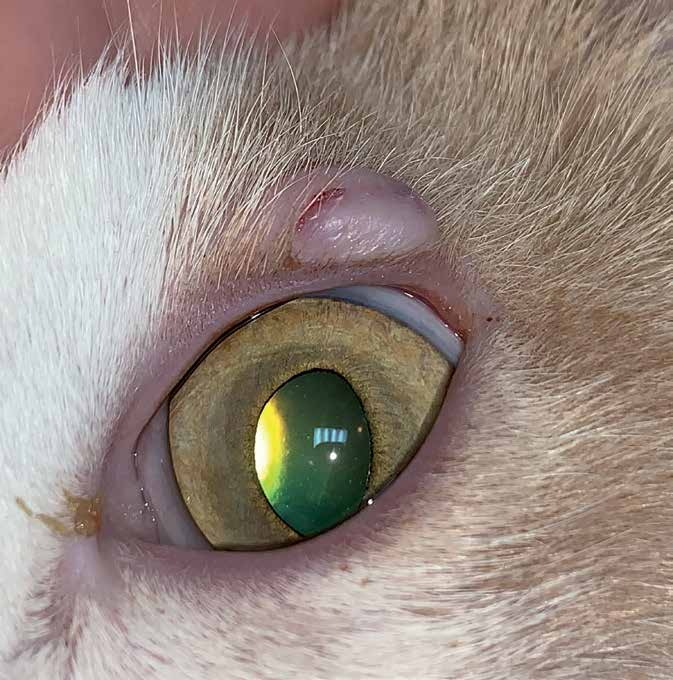
Mast cell tumor of the eyelid skin in a cat.
Adapted from the Atlas of Ocular Diseases in Dogs and Cats by Dr. Siniša D. Grozdanić and colleagues. © Animal Eye Consultants of Iowa. The text and clinical images on this page are original content from the authors' own clinical practice and research, and may not be reproduced, distributed, or repurposed without permission.
Think your pet may have mast cell tumor (mastocytoma)?
Early evaluation gives us the most treatment options and the best chance of preserving vision.