
Malassezia Dermatitis
Malassezia pachydermatis is a unicellular yeast that is normally present in small numbers on the skin of the external ear canal, perioral and perianal regions, and skin folds. In certain diseases, including atopic dermatitis, keratinization disorders, endocrine disorders, and bacterial infections, the number of these organisms increases substantially and clinical signs develop.
Affected animals are usually pruritic, with alopecia, erythema, and excoriations, and the skin has a greasy feel. Chronic cases develop hyperpigmentation, lichenification, hyperkeratosis, and an unpleasant sweet odor. Predisposed dog breeds include the West Highland White Terrier, Basset Hound, Cocker Spaniel, Irish Setter, Shih Tzu, and Poodle; among cats, the Devon Rex is predisposed.
Treatment
Diagnosis is established by cytologic or microbiologic examination of a skin sample. Treatment consists of topical and/or systemic antifungal therapy for a minimum of four weeks. Successful treatment also requires control of the primary underlying disease.
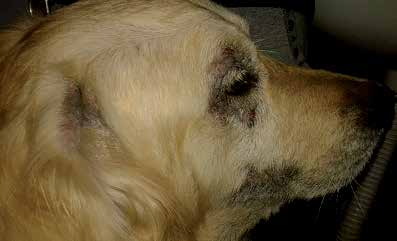
Malassezia dermatitis. Alopecia, hyperpigmentation, and scales around the eyes and lips and on the pinna.
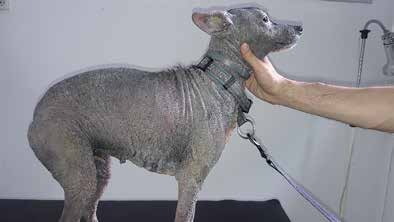
Malassezia dermatitis in a dog with atopic dermatitis. Generalized alopecia, hyperpigmentation, and lichenification.
Adapted from the Atlas of Ocular Diseases in Dogs and Cats by Dr. Siniša D. Grozdanić and colleagues. © Animal Eye Consultants of Iowa. The text and clinical images on this page are original content from the authors' own clinical practice and research, and may not be reproduced, distributed, or repurposed without permission.
Think your pet may have malassezia dermatitis?
Early evaluation gives us the most treatment options and the best chance of preserving vision.