
Leishmaniasis
Leishmaniasis is a protozoal infection transmitted by the bite of sand flies of the genus Phlebotomus. The disease occurs most commonly in endemic regions such as the Mediterranean basin and Central and South America. Visceral and cutaneous forms of the disease develop several weeks to several years after the initial infection.
The first changes occur on the skin of the head and consist of alopecia and exfoliative dermatitis with silvery, dry scales. In some cases, erosions and ulcerations, cutaneous nodules, nasodigital hyperkeratosis, and extremely long, brittle nails are present. Affected animals often have decreased appetite, lose weight, develop muscle wasting, move reluctantly, and appear depressed. In advanced disease, polydipsia and polyuria develop as a result of impaired renal function. Cats are affected much less frequently; lesions most commonly consist of nodular or crusting dermatitis localized to the pinnae, eyelids, lips, and nose.
Treatment
The disease is suspected based on cytologic examination of a lymph-node aspirate and confirmed by PCR or serologic testing (ELISA, IFAT, ICS). Treatment depends on the overall health of the patient, particularly renal function. At the time described in the source, leishmaniasis is considered incurable and relapses are common. The most commonly used combination is allopurinol with meglumine antimoniate or miltefosine. In endemic regions, the most important preventive measure is protection with ectoparasiticides that repel sand flies, including preparations containing permethrin or deltamethrin.
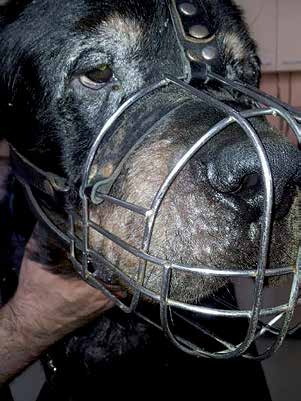
Leishmaniasis. Alopecia and silvery scales on the cheeks and around the eyes.
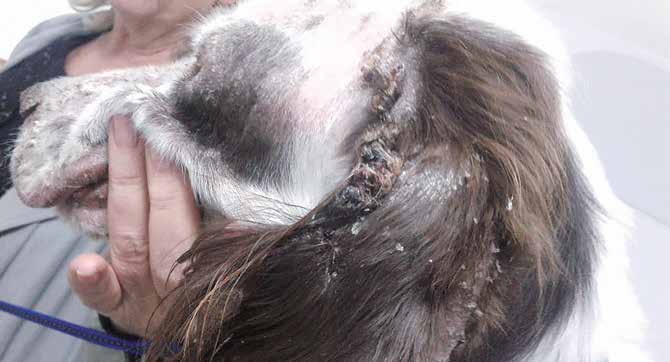
Leishmaniasis. Alopecia, silvery scales, and crusts along the margin of the pinna.
Adapted from the Atlas of Ocular Diseases in Dogs and Cats by Dr. Siniša D. Grozdanić and colleagues. © Animal Eye Consultants of Iowa. The text and clinical images on this page are original content from the authors' own clinical practice and research, and may not be reproduced, distributed, or repurposed without permission.
Think your pet may have leishmaniasis?
Early evaluation gives us the most treatment options and the best chance of preserving vision.