
Eosinophilic Folliculitis and Blepharitis
Eosinophilic folliculitis is an acute disease believed to represent a hypersensitivity reaction to the bite or sting of certain insects, including bees, wasps, spiders, or ants. Lesions are localized to the skin of the head, particularly above the muzzle, around the nostrils, and periocularly, and consist of erythematous papules, crusts, ulcerations, and hemorrhage. Lesions can be extremely painful. In some cases, lesions may also occur on the pinnae, chest, and abdomen. Severe cases may be associated with an anaphylactic reaction. Young, large-breed dogs are most commonly affected.
Treatment
Diagnosis is established by cytologic examination or histopathologic evaluation of a tissue specimen, which demonstrates eosinophilic infiltration of the hair follicles, giving the disease its name. In most cases the disease resolves spontaneously. Corticosteroids may occasionally be necessary, and antibiotics are used if a secondary bacterial infection is present.
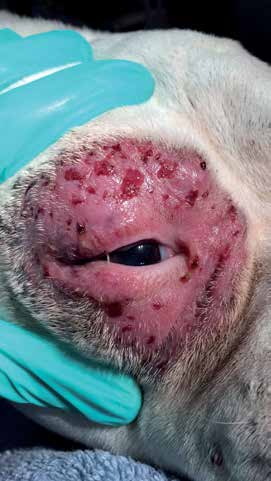
Eosinophilic folliculitis in a dog. Periocular alopecia, erythema, edema, and hemorrhage are present.
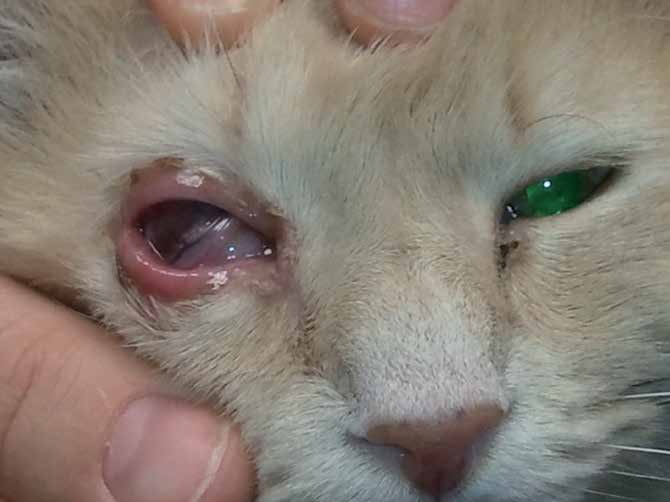
Eosinophilic blepharitis in a cat. Periocular alopecia, erythema, edema, and depigmentation of the eyelid margin with conjunctival inflammation are visible.
Adapted from the Atlas of Ocular Diseases in Dogs and Cats by Dr. Siniša D. Grozdanić and colleagues. © Animal Eye Consultants of Iowa. The text and clinical images on this page are original content from the authors' own clinical practice and research, and may not be reproduced, distributed, or repurposed without permission.
Think your pet may have eosinophilic folliculitis and blepharitis?
Early evaluation gives us the most treatment options and the best chance of preserving vision.