
Conjunctivitis Caused by Herpesvirus, Chlamydia, and Mycoplasma
Feline herpesvirus type 1, the causative agent of feline viral rhinotracheitis, has a tropism for the epithelium of the conjunctiva and respiratory tract, where it replicates and causes epithelial necrosis. The virus remains latent for the patient's lifetime in nerve endings that innervate the eye and periocular structures. Transmission is most commonly airborne. Young kittens exposed to the virus for the first time are the most susceptible. In addition to ocular signs of herpesvirus infection, affected kittens may develop fever, lethargy, loss of appetite, sneezing, coughing, and nasal discharge.
Bilateral conjunctivitis with marked conjunctival edema, keratitis, corneal ulceration, corneal sequestra, and subsequent symblepharon are commonly observed. The disease is frequently complicated by secondary infection with other viruses such as calicivirus, bacteria such as Bordetella, chlamydial organisms such as Chlamydophila felis, and mycoplasmas such as Mycoplasma spp. Once infected, an animal remains a lifelong carrier and develops a latent infection. Recurrence of disease may occur whenever immunity decreases, most commonly because of stress, concurrent disease, or treatment with immunosuppressive medications.
In adult cats, recurrent episodes of herpesvirus infection usually present primarily as conjunctivitis with sporadic keratitis. Conjunctival hyperemia and swelling, blepharospasm, and ocular discharge may be present; the discharge can be serous, mucoid, or mucopurulent.
Treatment
Serologic testing can be used diagnostically, and polymerase chain reaction (PCR) testing is particularly useful. Topical and systemic antiviral medications are used for treatment. Owners of cats with latent herpesvirus infection are advised to minimize stressful situations for their pets.
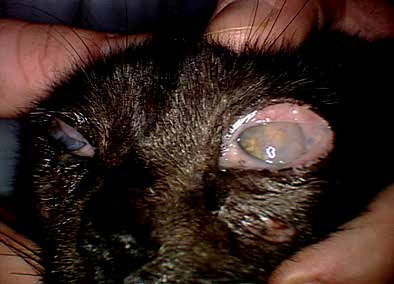
Herpesvirus infection in a cat. Keratitis, corneal vascularization, conjunctival chemosis, and abnormal ocular discharge are present.
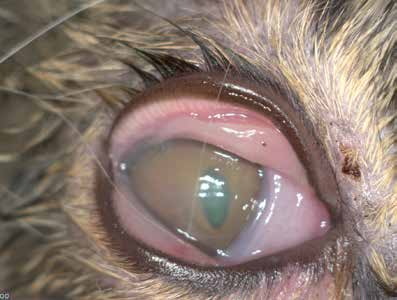
Herpesvirus infection in a cat. The conjunctiva is damaged and necrotic, with erosions. The cornea is cloudy because of edema.
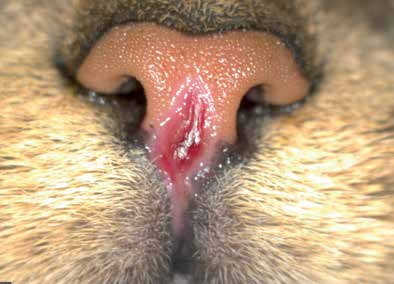
Nasal lesion caused by herpesvirus infection in a kitten. This is an atypical lesion.
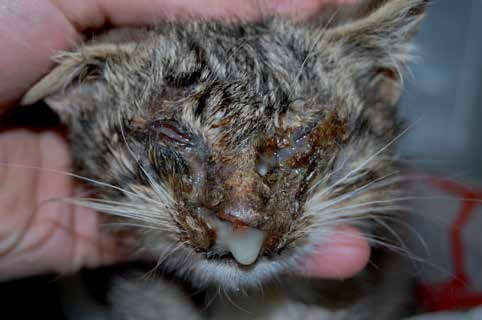
Acute herpesvirus infection in a kitten. Because of secondary bacterial infection, blepharospasm, conjunctivitis with purulent discharge from both eyes, and purulent rhinitis are present. Accumulated exudate and crust formation are visible periocularly.
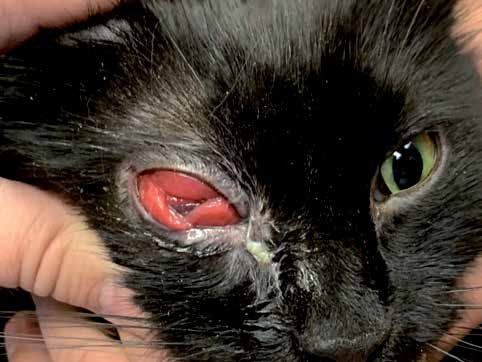
Chlamydial/mycoplasmal infection in a cat. The conjunctiva is damaged and necrotic, with erosions. The cornea has a stromal ulcer that is obscured by conjunctival edema. In this case, chlamydia and mycoplasma are the primary causes of conjunctivitis, although they most commonly occur as secondary pathogens after acute ocular herpesvirus infection. Mycoplasma is described in the source as a frequent cause of aggressive corneal ulcers in cats.
Adapted from the Atlas of Ocular Diseases in Dogs and Cats by Dr. Siniša D. Grozdanić and colleagues. © Animal Eye Consultants of Iowa. The text and clinical images on this page are original content from the authors' own clinical practice and research, and may not be reproduced, distributed, or repurposed without permission.
Think your pet may have conjunctivitis caused by herpesvirus, chlamydia, and mycoplasma?
Early evaluation gives us the most treatment options and the best chance of preserving vision.