
Chorioretinitis in Cats
Inflammation or infection of the choroid and retina may develop as a primary ocular disease or as part of systemic disease. The source lists systemic neoplastic disease such as lymphoma, infectious diseases including FeLV, FIV, FIP, Toxoplasma gondii, Cryptococcus neoformans, and Bartonella spp., as well as autoimmune, toxic, and metabolic disorders.
Fundic examination may show localized or diffuse retinal edema and retinal detachment. Retinal hemorrhages and cellular infiltrates may be visible. Posterior uveitis may accompany anterior uveitis. Glaucoma and retinal detachment are among the most serious complications. Patients may have severe visual impairment or blindness.
Treatment
Signs of chorioretinitis are readily identified ophthalmically, but determining the primary cause can be difficult. Complete blood count, serum biochemistry, and serologic testing for infectious diseases are recommended. Diagnosis of neoplastic and autoimmune causes may be more challenging. Treatment includes topical and systemic anti-inflammatory medications plus specific treatment for the underlying disease and complications.
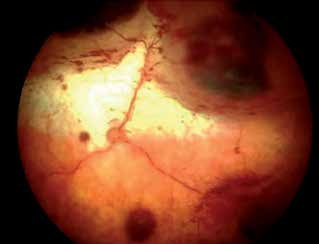
Chorioretinitis in a cat associated with FIP. Numerous localized hemorrhages and focal retinal detachment caused by subretinal hemorrhage are visible.
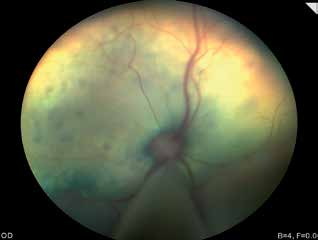
Chorioretinitis in a cat diagnosed with FIP. Localized areas of retinal detachment are visible.
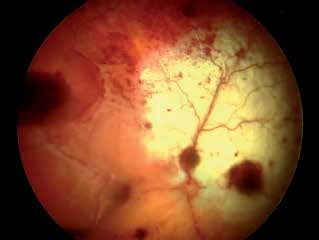
Chorioretinitis in a cat diagnosed with FIP. Numerous perivascular lesions are visible as a result of vasculitis.
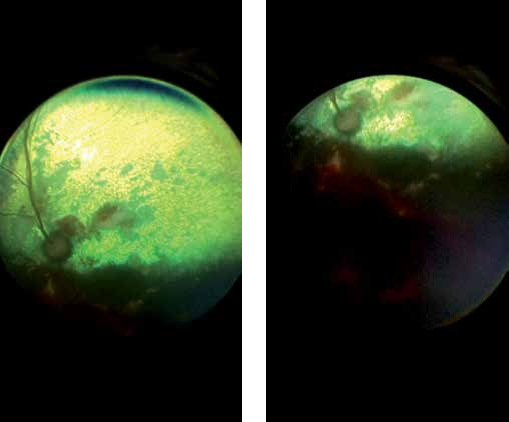
Chorioretinitis in a cat after being shot with an air rifle. An intraocular pellet produces inflammation through tissue trauma, bacterial contamination from the skin, and the toxic effects of lead as described in the source. Optic nerve atrophy is also present.
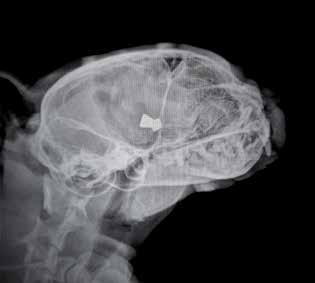
Radiograph of the same cat clearly showing the location of the pellet.
Related in-depth guide
Retinal Disorders
Our full guide, including treatment and surgical options
Adapted from the Atlas of Ocular Diseases in Dogs and Cats by Dr. Siniša D. Grozdanić and colleagues. © Animal Eye Consultants of Iowa. The text and clinical images on this page are original content from the authors' own clinical practice and research, and may not be reproduced, distributed, or repurposed without permission.
Think your pet may have chorioretinitis in cats?
Early evaluation gives us the most treatment options and the best chance of preserving vision.