
Aqueous Misdirection Syndrome in Cats
Feline aqueous misdirection syndrome is characterized by abnormal posterior movement of aqueous humor and its accumulation within the vitreous. Increased vitreous pressure displaces the iris and lens anteriorly, reducing anterior chamber volume and bringing the lens closer to the corneal endothelium. The anterior chamber is therefore described as “shallow.” Affected cats have mydriasis and elevated intraocular pressure. The disease is bilateral, slowly progressive, and leads to loss of vision if untreated.
Treatment
Diagnosis can be established by ophthalmic examination. Medical therapy is directed toward reducing aqueous-humor production, for example with the carbonic anhydrase inhibitor dorzolamide. If necessary, surgical treatment may include phacoemulsification with posterior capsulectomy, vitrectomy, and endocyclophotocoagulation. In cats with medically uncontrolled glaucoma, buphthalmos, and a painful blind eye, enucleation is recommended.
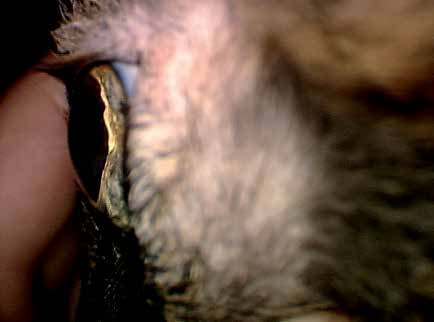
Aqueous misdirection syndrome in a cat. A shallow anterior chamber is visible.
Related in-depth guide
Glaucoma
Our full guide, including treatment and surgical options
Adapted from the Atlas of Ocular Diseases in Dogs and Cats by Dr. Siniša D. Grozdanić and colleagues. © Animal Eye Consultants of Iowa. The text and clinical images on this page are original content from the authors' own clinical practice and research, and may not be reproduced, distributed, or repurposed without permission.
Think your pet may have aqueous misdirection syndrome in cats?
Early evaluation gives us the most treatment options and the best chance of preserving vision.