
Allergic Drug Reactions
Allergic drug reactions may occur after the first administration of a drug or after repeated administration. Several types of allergic reactions exist. They may occur suddenly after drug administration (anaphylactic reaction or type I hypersensitivity), in which case the reaction can be severe and potentially life-threatening. Allergic reactions may also develop later (type II, III, or IV hypersensitivity), with several days passing between drug administration and the first clinical signs.
Many medications may cause such allergic reactions, including antibiotics, nonsteroidal anti-inflammatory drugs, and ectoparasiticides. Reactions may also occur after administration of vaccines, vitamins, cytostatic drugs, and many other medications. Reactions to topically applied eye drops or ointments are also common. Skin lesions caused by allergic drug reactions frequently involve the eyelids, with periocular swelling and redness and the development of pustules and bullae that later rupture and leave erosions. Mucocutaneous junctions are often affected.
Treatment
Diagnosis is based on the history of administration of a specific medication. The drug suspected of causing the allergic reaction must be discontinued immediately. Supportive care is most commonly provided; glucocorticoids and antihistamines are used for very aggressive systemic allergic reactions, whereas topical therapy is used when inflammatory changes are limited to the eyelids, including lacrimostimulants and lubricants.
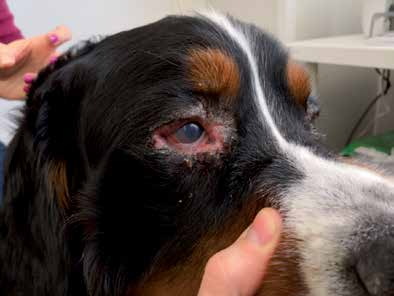
Allergic reaction to topically applied dorzolamide. Erythema, alopecia, depigmentation, edema, erosions, and crusts are visible on the eyelids.
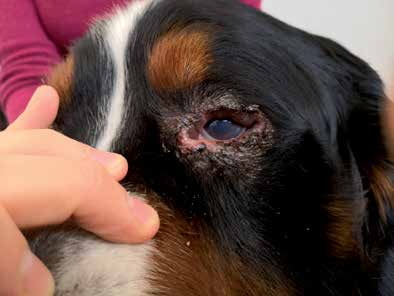
Allergic reaction to topically applied dorzolamide. Same dog, same changes, other eye.
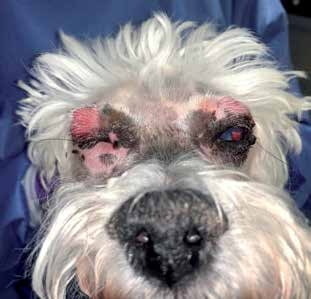
Allergic reaction to topically applied dorzolamide that developed 24 hours after the first application of the medication.
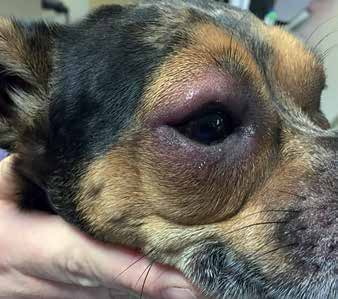
Allergic blepharitis that developed four hours after vaccination. This patient developed a superficial corneal ulcer.
Adapted from the Atlas of Ocular Diseases in Dogs and Cats by Dr. Siniša D. Grozdanić and colleagues. © Animal Eye Consultants of Iowa. The text and clinical images on this page are original content from the authors' own clinical practice and research, and may not be reproduced, distributed, or repurposed without permission.
Think your pet may have allergic drug reactions?
Early evaluation gives us the most treatment options and the best chance of preserving vision.