
Allergic Conjunctivitis
The conjunctiva is rich in immune-system cells and represents the first line of defense against antigens. Consequently, allergic conjunctivitis is common. Allergies are the most common cause of conjunctivitis in dogs, whereas viruses and bacteria are the most common causes in cats according to the source. The history often reveals previous diagnoses of allergic otitis, flea allergy, pollen allergy, or food allergy, or previous or current skin lesions suspected to be allergic in nature.
When dogs are exposed to allergens such as dust, grass, pollen, smoke, topical medications, and other triggers, they can develop allergic ocular changes similar to those seen in people. Conjunctival swelling and redness, follicular proliferation, epiphora, blepharospasm, and sometimes mucoid ocular discharge may develop. The dog may experience pruritus and may injure the cornea while scratching. Conjunctivitis may occur seasonally or throughout the year, either as the only manifestation of allergy or as part of generalized allergic disease.
Treatment
Diagnosis of allergic conjunctivitis is established by a detailed ophthalmic examination and assessment for hidden abnormalities. A Schirmer tear test is performed to determine tear-film quantity, nasolacrimal duct patency is evaluated, intraocular pressure is measured, and a conjunctival sample is obtained for cytologic and microbiologic examination. If these findings are normal, suspicion of allergic conjunctivitis can be confirmed by biopsy demonstrating substantial numbers of mast cells, eosinophils, lymphocytes, and plasma cells. Allergy testing may identify possible causes. Treatment includes avoidance of the allergen when possible, systemic control of allergy, and topical administration of anti-inflammatory medications.
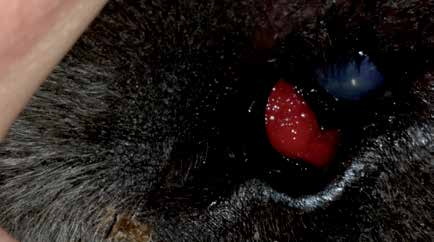
Follicular conjunctivitis can irritate the corneal surface or even result in development of a corneal ulcer. Follicular conjunctivitis most commonly develops in young dogs as a result of chronic allergies.
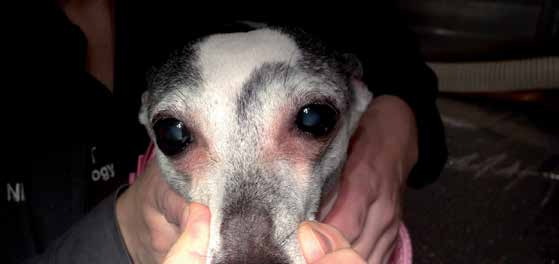
Allergic conjunctivitis in a dog.
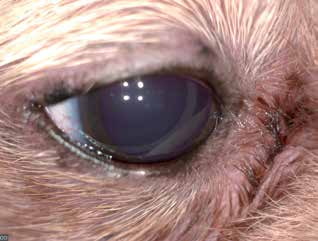
Allergic conjunctivitis in a dog.
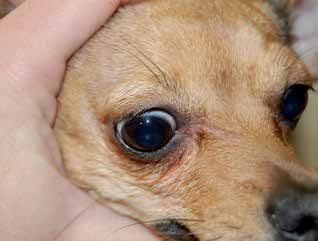
Allergic conjunctivitis in a dog.
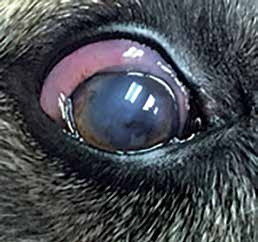
Allergic conjunctivitis in a dog resulting from an allergic reaction to the topical anesthetic tetracaine. Conjunctival edema is evident.
Adapted from the Atlas of Ocular Diseases in Dogs and Cats by Dr. Siniša D. Grozdanić and colleagues. © Animal Eye Consultants of Iowa. The text and clinical images on this page are original content from the authors' own clinical practice and research, and may not be reproduced, distributed, or repurposed without permission.
Think your pet may have allergic conjunctivitis?
Early evaluation gives us the most treatment options and the best chance of preserving vision.