
Corneal Cross-Linking (CXL) for Corneal Ulcers
A minimally invasive treatment that can strengthen diseased corneal tissue and help control rapidly progressive “melting” ulcers in dogs and cats.
Why this treatment matters
Some corneal ulcers release or attract enzymes that digest the corneal stroma. This process — called keratomalacia or “corneal melting” — can progress quickly and may lead to perforation and loss of the eye. Corneal cross-linking is designed to make the corneal collagen more resistant to enzymatic breakdown while also providing a photoactivated antimicrobial effect.
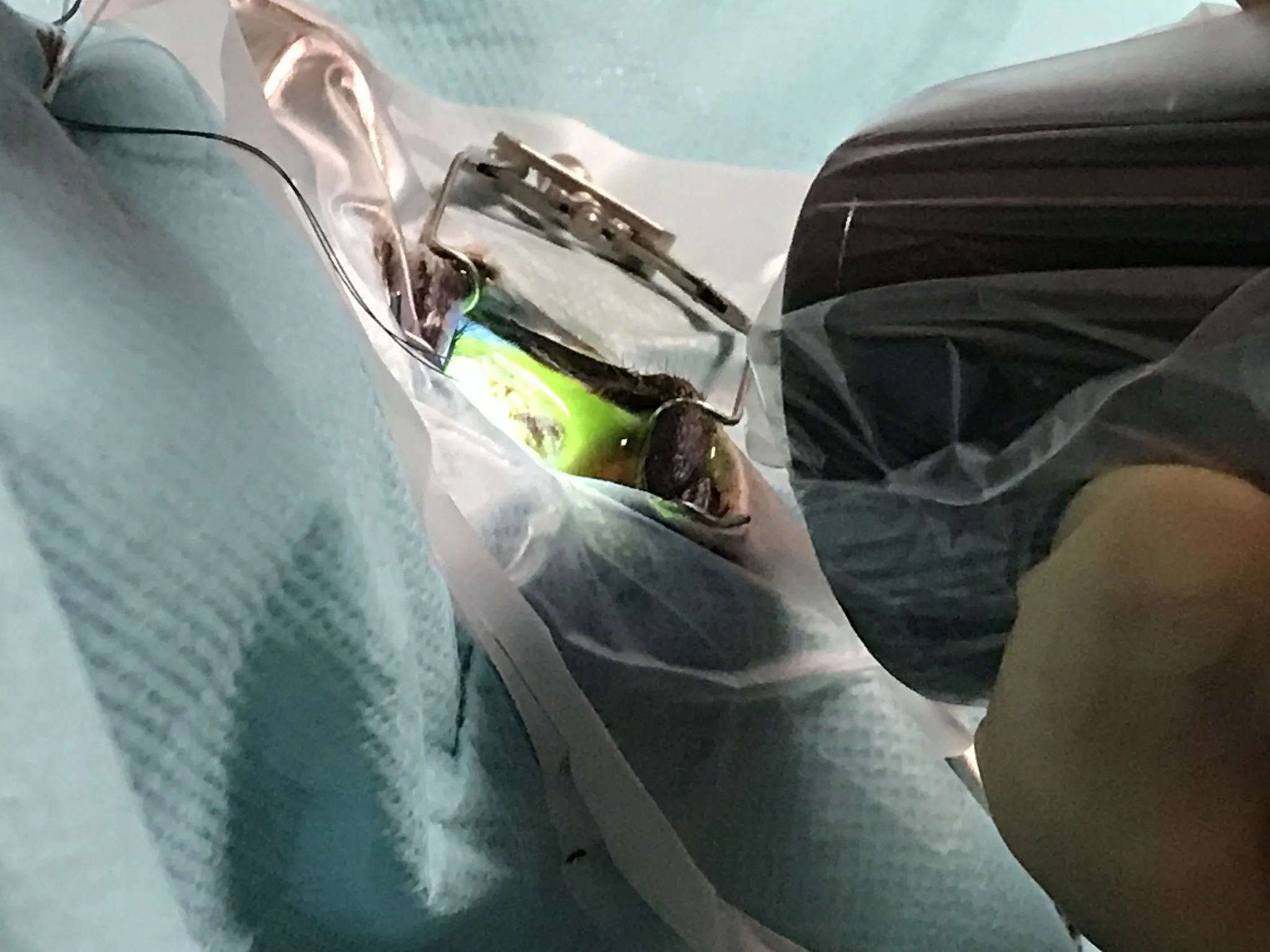
Corneal cross-linking treatment performed under magnification using a controlled ultraviolet-A light source.
What is corneal cross-linking?
Corneal cross-linking (CXL) uses riboflavin (vitamin B2) together with a carefully controlled ultraviolet-A (UVA) light source. The light activates the riboflavin and creates additional chemical bonds between collagen fibers in the cornea. These new bonds increase stromal strength and resistance to collagen-digesting enzymes.
When CXL is used specifically to treat infectious keratitis, it is often called PACK-CXL (photoactivated chromophore for keratitis–corneal cross-linking). In addition to strengthening the cornea, the photochemical reaction can reduce the viability of many microorganisms. CXL is usually used together with appropriate medical treatment rather than as a replacement for antibiotics, antifungal medication, pain control, or other therapies when these are needed.
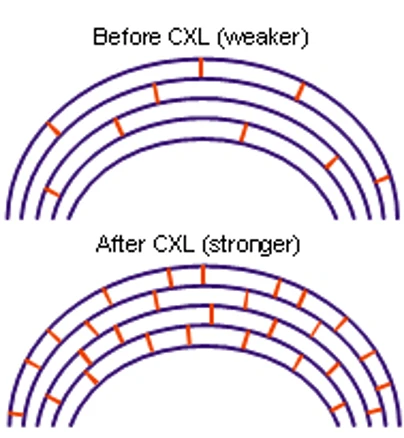
Cross-linking creates additional bonds between corneal collagen fibers, helping make the cornea stronger and more resistant to enzymatic digestion.
How CXL helps
- Strengthens corneal collagen and increases resistance to collagenase and other tissue-digesting enzymes
- Can help slow or stop progression of corneal melting in appropriately selected cases
- Provides a photoactivated antimicrobial effect that can complement conventional antimicrobial therapy
- May reduce the need for emergency corneal grafting in some patients, although surgery is still necessary when structural support is inadequate
When might your pet benefit from CXL?
A veterinary ophthalmologist may recommend corneal cross-linking when an ulcer is at risk of becoming structurally unstable or is progressing despite conventional treatment. Common situations include:
- Melting (keratomalacic) corneal ulcers
- Infected or heavily infiltrated stromal ulcers
- Ulcers that are deepening rapidly or losing stromal tissue
- Ulcers that have not responded adequately to intensive medical therapy
- Selected cases in which CXL may help stabilize the cornea and reduce the likelihood of needing more invasive surgery
CXL is not appropriate for every ulcer
Very deep ulcers, descemetoceles, actively leaking or perforated corneas, and eyes with insufficient residual corneal thickness may require immediate surgical reconstruction instead of — or in addition to — cross-linking. The decision is based on ulcer depth, location, infection, corneal stability, tear production, and the overall health of the eye.
What happens during the procedure?
- Detailed examination — The ulcer is evaluated under magnification. Fluorescein staining, cytology, bacterial or fungal culture, corneal thickness assessment, and other tests may be recommended depending on the case.
- Riboflavin application — Riboflavin solution is applied to and allowed to saturate the diseased corneal tissue.
- Controlled UVA treatment — A specialized device delivers a measured UVA dose to the cornea. Protocols vary according to the equipment, corneal thickness, and severity of disease.
- Continued medical therapy — Antimicrobial medications, anticollagenase treatment, lubrication, pain medication, and an Elizabethan collar may still be required after CXL.
- Close rechecks — Frequent examinations are important during the first days after treatment so that healing, ulcer depth, infection, and corneal stability can be monitored.
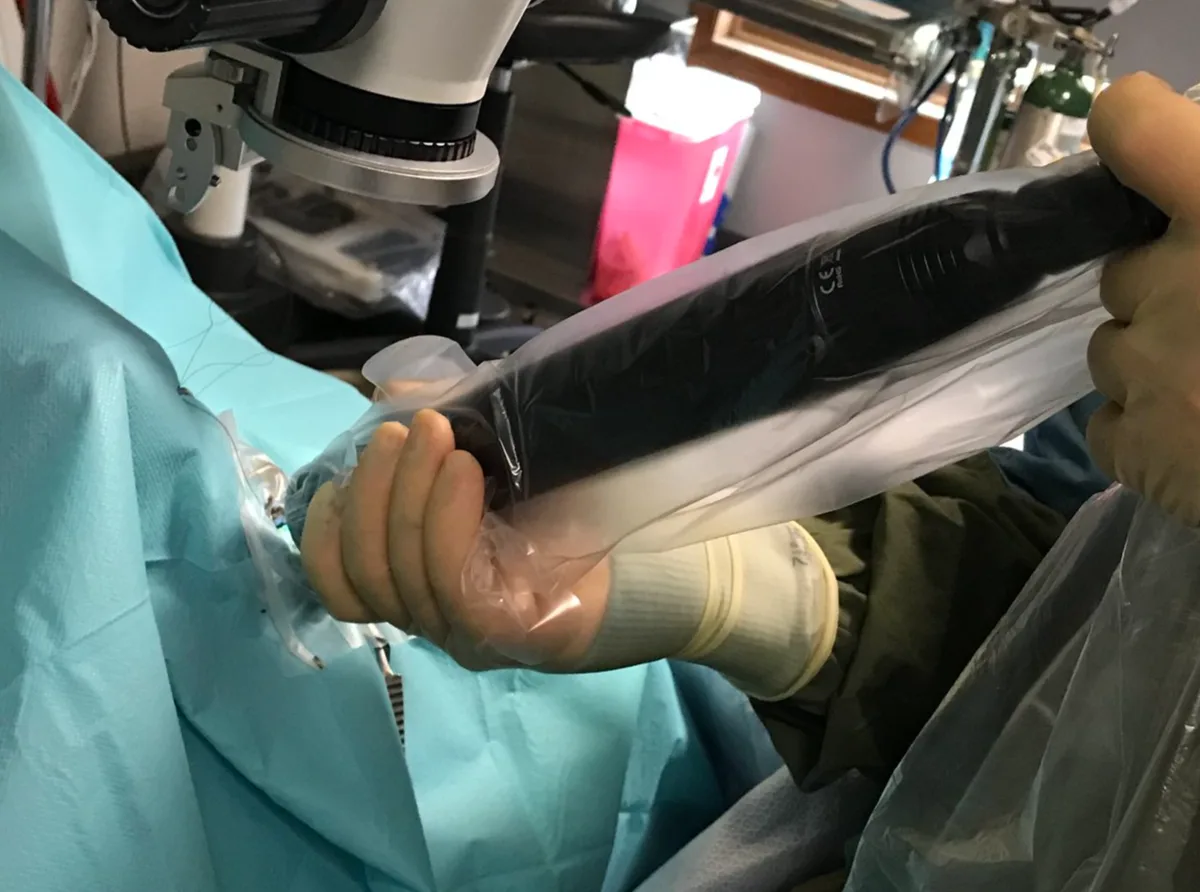
CXL treatment performed under an operating microscope.
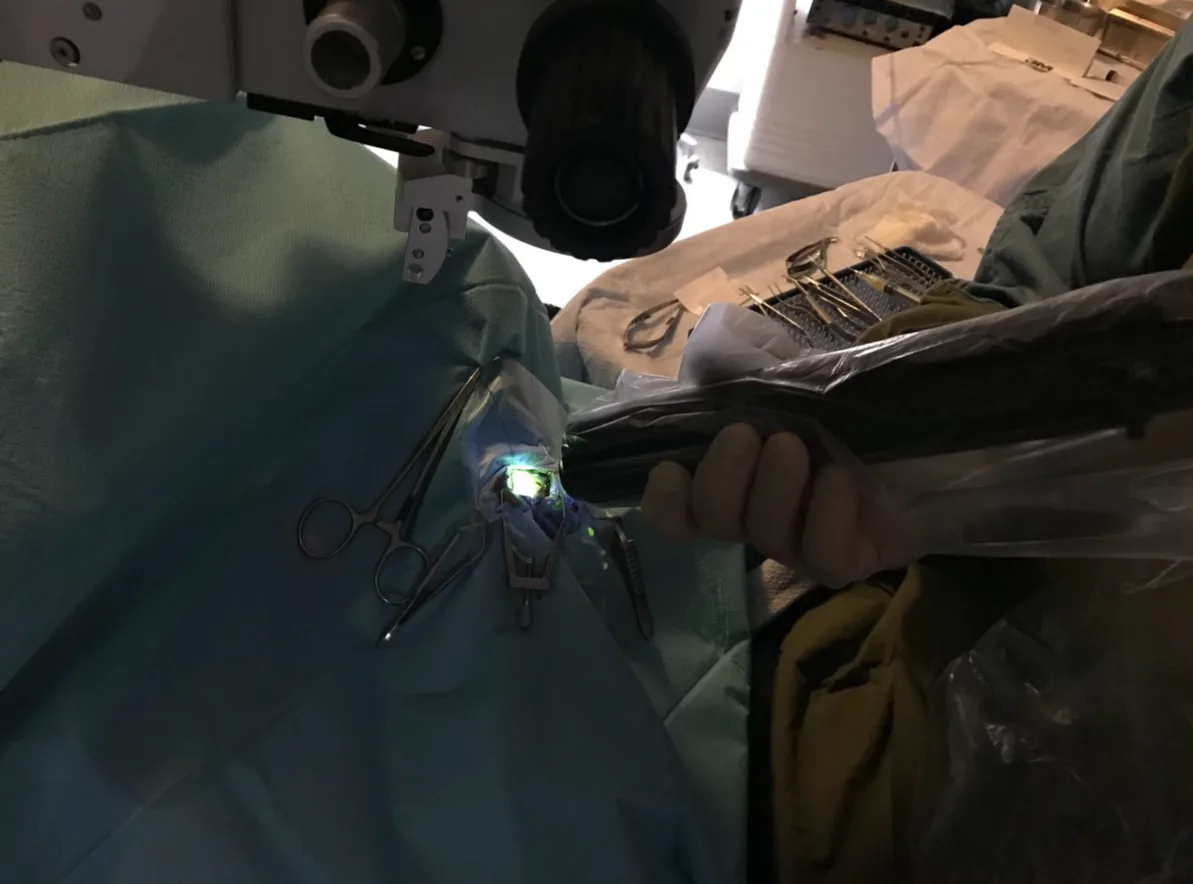
The UVA light source is positioned directly over the cornea during treatment.
What are the advantages?
- Minimally invasive compared with corneal grafting procedures
- Can rapidly increase resistance of the cornea to enzymatic “melting”
- Provides an additional antimicrobial effect at the site of infection
- Often performed as a single treatment, although some eyes require additional procedures or surgery
- May preserve corneal structure and vision in cases that otherwise have a high risk of progression
What should owners expect after treatment?
The eye may remain red, cloudy, vascularized, and uncomfortable while the ulcer heals. Most pets continue several topical medications and must wear an Elizabethan collar to prevent rubbing. Healing time varies with ulcer depth, infection, tear production, and the amount of damaged tissue.
- Corneal discomfort often improves as the infection and melting process become controlled
- The surface of the cornea may take days to several weeks to fully re-epithelialize
- Some degree of permanent corneal scarring, vascularization, or pigmentation may remain after healing
- Vision depends on the location and depth of the ulcer and the amount of residual scarring
How successful is corneal cross-linking?
Published veterinary studies support CXL as a useful adjunctive treatment for infectious and noninfectious corneal melting. Early prospective studies showed stabilization of many melting ulcers and reduced deepening compared with medical therapy alone. In a large 2025 retrospective series of 369 dogs and cats treated with accelerated PACK-CXL, 97% healed without a rescue procedure; however, the risk of failure increased substantially in ulcers involving more than about two-thirds of the corneal thickness.
Important
Published results describe groups of patients and cannot predict the outcome for an individual pet. Deep ulcers, aggressive infections, delayed presentation, dry eye, and impending perforation can all worsen prognosis. Some patients still require conjunctival grafting, corneal transplantation, or other reconstructive surgery despite CXL.
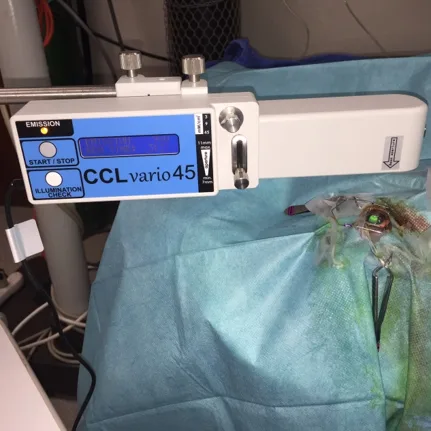
Example of a specialized corneal cross-linking UVA system used to deliver a controlled treatment dose.
Possible complications and limitations
- Continued stromal melting or progression to corneal perforation
- Need for additional medical treatment or emergency corneal surgery
- Corneal scarring, vascularization, pigmentation, or persistent opacity
- Delayed epithelial healing or ongoing infection
- In very thin corneas, potential injury to deeper corneal structures — one reason careful case selection and thickness assessment are important
Frequently asked questions
Is CXL the same as laser treatment?
No. CXL uses riboflavin plus ultraviolet-A light to create a photochemical reaction in the cornea. It does not remove tissue like an excimer laser.
Will my pet still need antibiotic drops?
Usually yes. CXL complements, rather than automatically replaces, antimicrobial and supportive therapy. Medication is tailored to the infection and ulcer severity.
Does the treatment hurt?
The procedure is performed with appropriate anesthesia and pain control. The ulcer itself may remain uncomfortable during the early healing period, so postoperative analgesia is commonly needed.
Can CXL prevent surgery?
Sometimes. In selected cases, CXL can stabilize the cornea sufficiently to avoid grafting. However, severely thinned, leaking, or perforated corneas often still require surgery.
How quickly should the eye be rechecked?
Melting ulcers can change rapidly. Rechecks are commonly scheduled within 24–72 hours initially, with the exact timing based on ulcer severity and response to treatment.
A melting corneal ulcer is an ophthalmic emergency
If your pet has a painful red eye, sudden cloudiness, yellow/green discharge, a visible corneal defect, or rapidly worsening appearance, prompt veterinary ophthalmic evaluation is recommended. Corneal melting can progress over hours to days.
Scientific references
Spiess BM, et al. Corneal collagen cross-linking (CXL) for the treatment of melting keratitis in cats and dogs: a pilot study. Veterinary Ophthalmology. 2014;17(1):1-11. PMID: 23356663.
Pot SA, et al. Corneal collagen cross-linking as treatment for infectious and noninfectious corneal melting in cats and dogs: results of a prospective, nonrandomized, controlled trial. Veterinary Ophthalmology. 2014;17(4):250-260. PMID: 23941330.
Famose F. Evaluation of accelerated collagen cross-linking for the treatment of melting keratitis in eight dogs. Veterinary Ophthalmology. 2014;17(5):358-367. PMID: 23902524.
Crasta M, et al. Photoactivated chromophore for keratitis–corneal cross-linking in dogs and cats: a retrospective study in Italy. Veterinary Ophthalmology. 2025. PMID: 39455420.
Concerned about a deep or melting corneal ulcer?
Contact Animal Eye Consultants of Iowa for urgent ophthalmic evaluation and to determine whether corneal cross-linking or surgical stabilization is the best option for your pet.